How Many Tablespoons of Coffee Per Cup: Find Your Ideal Ratio Fast
Getting your morning brew just right depends on using the correct amount of coffee grounds, but most people aren’t sure exactly how much to add.
The standard measurement is 1 to 2 tablespoons of ground coffee per 6 ounces of water, though this can vary based on your brewing method and taste preferences.
This simple ratio forms the foundation for making a balanced cup, whether you’re using a drip machine or a French press.
Many coffee drinkers struggle with weak or overly bitter coffee because they eyeball their measurements instead of following proven ratios. Understanding the relationship between coffee grounds and water helps you control the strength and flavor of every cup you make. Small adjustments to your tablespoon count can transform your daily coffee from mediocre to excellent.
Your brewing method, bean type, and personal taste all play a role in determining the ideal measurement for your situation. Learning how these factors work together gives you the ability to consistently make coffee that matches your preferences without wasting grounds or settling for disappointing results.
Understanding Tablespoons of Coffee Per Cup
Getting the coffee-to-water ratio right requires knowing what a tablespoon actually measures and how cup sizes vary across different brewing methods. Standard measurements use either 6 oz or 8 oz as a “cup,” which changes how many tablespoons you’ll need.
What Is a Coffee Tablespoon?
A coffee tablespoon measures approximately 5 to 7 grams of ground coffee, depending on your grind size and density. Coarser grinds weigh less per tablespoon than finer grinds because air fills more space between the particles.
You’ll get more accurate results using a kitchen scale instead of measuring spoons. A standard tablespoon volume equals 15 milliliters, but coffee weight varies based on roast level and grind consistency.
Dark roasts typically weigh less than light roasts per tablespoon because the roasting process creates more air pockets in the beans. Pre-ground coffee also settles differently than freshly ground beans, affecting your measurements.
Defining a Cup in Coffee Brewing
Coffee brewing uses two different cup measurements that create confusion. The coffee industry standard defines one cup as 6 oz (177 ml), while a typical kitchen measuring cup holds 8 oz (237 ml).
Most drip coffee makers mark their carafes using the 6 oz standard. If you pour an 8 oz mug from your machine, you’re actually getting 1.33 coffee “cups” according to brewing measurements.
Your coffee mug likely holds 10 to 12 oz of liquid, which means you need to scale your tablespoons accordingly. Restaurant and café servings often use 12 oz for a small coffee and 16 oz for a medium.
Standard Tablespoons per 6 oz and 8 oz
For a 6 oz cup, you should use 1 to 2 tablespoons of ground coffee. This ratio creates a balanced extraction that avoids both weak, watery coffee and over-extracted bitterness.
An 8 oz cup requires 1.5 to 2.5 tablespoons of coffee to maintain the same strength. Most coffee drinkers find 2 tablespoons per 6 oz produces their preferred taste profile.
You can adjust within this range based on your bean type and personal preference. Bolder roasts work well at the lower end (1 tablespoon per 6 oz), while lighter roasts benefit from the upper range (2 tablespoons per 6 oz).
The Coffee-To-Water Ratio Explained
The coffee-to-water ratio determines how much ground coffee you need for a specific amount of water, typically expressed as tablespoons per ounces or grams per milliliters.
Most brewing methods follow a standard guideline, though you can adjust based on your preferred strength.
The Golden Ratio: 1–2 Tablespoons per 6 Ounces
You should use 1–2 tablespoons of coffee per 6 ounces of water for most drip coffee makers and pour-over methods. This measurement serves as the baseline for balanced extraction.
Standard coffee cups are often 6 ounces, not the 8-ounce kitchen measuring cup you might use at home. If you’re brewing with an 8-ounce mug, increase your coffee to 2–3 tablespoons to maintain the proper ratio.
Using less than 1 tablespoon per 6 ounces produces weak, under-extracted coffee. More than 2 tablespoons can lead to bitter, over-extracted flavors unless you’re specifically aiming for a stronger brew.
Using Weight Versus Volume Measurements
A coffee scale provides more accuracy than tablespoon measurements because grind size and roast level affect volume. One tablespoon of coffee equals approximately 5–7 grams depending on these factors.
Weighing your coffee and water eliminates guesswork and ensures consistency across different beans and brewing sessions. Professional baristas rely on gram measurements rather than tablespoons for this reason.
Volume measurements work well for convenience, but the density of your grounds varies between light and dark roasts. Finely ground espresso takes up less space per gram than coarsely ground French press coffee, making tablespoon measurements less reliable for precision brewing.
1:15 Coffee-to-Water Ratio and Other Conversions
The 1:15 coffee-to-water ratio means 1 gram of coffee for every 15 grams of water, producing a moderately strong cup. You can also use 1:16 for a lighter brew or 1:14 for increased intensity.
Converting ratios to tablespoons: a 1:15 ratio equals roughly 1 tablespoon of coffee per 8–10 ounces of water. Some brewers prefer the 1:18 golden ratio (1 gram coffee to 18 grams water) for smooth, well-balanced results.
French press typically requires a stronger 1:12 to 1:14 ratio, while cold brew uses 1:5 to 1:8 due to its extended steeping time. Each brewing method extracts coffee differently, requiring specific ratio adjustments for optimal flavor.
Adjusting Tablespoons for Different Brewing Methods
Each brewing method extracts coffee at different rates and requires specific coffee-to-water ratios to produce balanced flavor. A tablespoon measurement that works for drip coffee will produce weak results in French press or overly strong coffee in pour-over systems.
Drip Coffee Makers
Use 1 to 2 tablespoons of ground coffee per 6 ounces of water in automatic drip machines. Most coffee makers define a cup as 5 to 6 ounces, not the standard 8-ounce beverage cup you drink from.
A 12-cup drip machine typically brews 60 to 72 ounces total. For this volume, measure 10 to 12 tablespoons for lighter coffee or 18 to 20 tablespoons for stronger brew. The middle ground of 1.5 tablespoons per 6 ounces (about 15 tablespoons for a full pot) delivers consistent results for most preferences.
Drip machines use medium grind coffee. If your coffee tastes watery, increase the amount rather than brewing longer, as extended contact time in drip systems creates bitterness without adding strength.
French Press and Cafetière
French press requires 2 tablespoons of coarsely ground coffee per 6 ounces of water. This immersion method needs more coffee than drip because the grounds sit in water for 4 minutes without active circulation.
An 8-cup French press (32 ounces) needs 10 to 11 tablespoons of coarse grounds. The larger particle size of coarse coffee means each tablespoon contains only 5 to 6 grams compared to 7 grams in finer grinds.
If your French press tastes thin or sour, add another tablespoon before adjusting steep time. Muddy or bitter results indicate over-extraction rather than too much coffee—in that case, coarsen your grind first before reducing the amount.
Pour-Over and Chemex
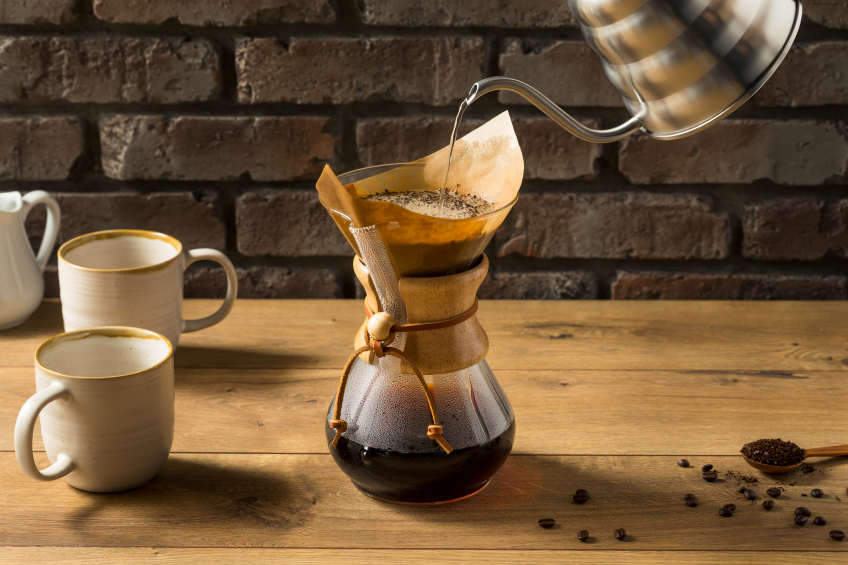
Pour-over methods like V60, Kalita Wave, and Chemex work best with 1.5 to 2 tablespoons per 6 ounces using medium to medium-fine grounds. These manual brewing techniques extract coffee efficiently through controlled pouring and paper filtration.
For a single 12-ounce cup, measure 3 to 4 tablespoons of ground coffee. Chemex users often increase to the higher end because its thick paper filters absorb more oils and require additional coffee to maintain body and flavor intensity.
The blooming phase in pour-over (adding twice the coffee’s weight in water for 30 seconds) affects extraction efficiency. A proper bloom lets you use slightly less coffee overall while achieving full flavor development.
Espresso, Cold Brew, and Specialty Methods
Espresso uses 1 heaping tablespoon (7 to 9 grams) for a single shot or 2 heaping tablespoons (14 to 18 grams) for a double shot with finely ground coffee. The pressurized extraction operates at fundamentally different ratios than gravity-based methods.
Cold brew demands 4 to 5 tablespoons per 6 ounces because cold water extracts compounds far less efficiently than hot water. A 32-ounce batch needs approximately 16 tablespoons of extra-coarse grounds steeped for 16 to 24 hours before diluting the concentrate 1:1 when serving.
AeroPress uses 1 to 1.5 tablespoons per 4 ounces of water for standard strength, or 2 to 2.5 tablespoons per 2 ounces when brewing concentrate. Moka pots don’t follow tablespoon ratios—fill the filter basket loosely to the top without tamping and let the basket size determine your coffee amount.
How Coffee Strength and Taste Preferences Impact Measurements
The amount of coffee per cup should change based on whether you want bold or mild flavor, how many cups you’re making at once, and the actual size of your drinking vessel.
Personalizing for Bold or Mild Coffee
Light coffee requires 1 to 1.5 tablespoons per 6-ounce cup for a subtle taste. Medium strength uses 2 tablespoons per 6-ounce cup for balanced flavor. Strong coffee needs 2.5 to 3 tablespoons per 6-ounce cup to achieve a robust profile.
Your grind size affects extraction rates and should inform your measurements. Finer grinds extract faster and produce stronger coffee, so you might reduce the amount slightly. Coarser grinds extract slower and create milder coffee, which may require adding more grounds to reach your desired strength.
Water temperature between 195°F and 205°F extracts flavor compounds efficiently. If you prefer bitter-free coffee, stay closer to 195°F with fewer tablespoons. Higher temperatures work better when you want maximum extraction and use the upper end of the measurement range.
Scaling Tablespoons for Multi-Cup Brewing
A 12-cup coffee maker needs 12 to 24 tablespoons depending on your preferred strength. For weak coffee in large batches, use 1 tablespoon per cup. For average strength, use 1.5 to 2 tablespoons per cup.
Two cups require 32 tablespoons total since one cup equals 16 tablespoons when measuring dry ingredients. When brewing four cups, multiply your single-cup measurement by four rather than using a simple doubling method.
A digital scale provides more accuracy than volume measurements for large batches. Weight-based brewing eliminates the compounding errors that occur when scaling tablespoon measurements up. Track your ratios in grams to maintain consistency across different batch sizes.
Adjusting for Mug Size and Custom Servings
Standard coffee cups measure 6 ounces, but your actual mug likely holds 8 to 12 ounces. An 8-ounce mug requires approximately 2.67 tablespoons for medium strength using the 2-tablespoons-per-6-ounce ratio. A 12-ounce mug needs 4 tablespoons for the same strength level.
Measure your mug’s capacity with water before calculating tablespoons of coffee per cup. Divide the ounce capacity by 6, then multiply by your preferred tablespoon amount. A 10-ounce travel mug would need 3.3 tablespoons for medium coffee (10 ÷ 6 × 2).
Espresso-style drinks concentrate flavor differently than drip methods and require separate measurement approaches. The perfect cup of coffee depends on matching your tablespoon quantity to your specific vessel size rather than using generic recommendations.
Factors That Influence Coffee Measurements
The amount of coffee you measure in tablespoons can vary significantly based on grind size, bean characteristics, and how fresh your coffee is. These factors affect both the weight of coffee in each tablespoon and how the coffee extracts during brewing.
Coffee Grind Size and Its Effect on Tablespoon Accuracy
Coffee grind size directly changes how much coffee fits into a tablespoon. Fine grinds pack more densely, meaning one tablespoon of espresso grind weighs 7-8 grams, while the same tablespoon of coarse French press grind weighs only 4-5 grams.
This weight difference matters because coffee strength depends on the actual mass of grounds, not volume. When you switch from medium to fine grind using the same tablespoon measure, you’re adding 40-60% more coffee to your brew.
Coarse grinds also have more air gaps between particles, which reduces the amount of coffee per tablespoon. If your recipe calls for tablespoons but you change your grind size, you need to adjust the number of tablespoons accordingly.
Coffee Bean Type and Roast Level
Different coffee bean types have varying densities that affect tablespoon measurements. Light roast beans are denser than dark roast beans because extended roasting creates more internal gas pockets and reduces moisture content.
A tablespoon of light roast coffee typically weighs 6-7 grams, while the same volume of dark roast weighs 5-6 grams. Single-origin beans like Ethiopia Yirgacheffe or Colombia Excelso Huila may have different densities based on growing altitude and processing methods.
Freshness and Storage of Coffee Grounds
Fresh coffee beans contain oils and gases that affect how they measure in tablespoons. Beans lose approximately 2% of their mass within the first week after roasting due to carbon dioxide release.
Pre-ground coffee exposed to air becomes less dense over time as oils evaporate and moisture absorbs. Coffee stored in humid conditions can gain 8-10% weight from moisture absorption, which makes tablespoon measurements unreliable.
You should grind beans immediately before brewing to maintain consistent measurements. Coffee grounds stored for more than two weeks produce different tablespoon weights compared to freshly ground beans from the same bag.
Tips for Achieving Consistent Results Every Time
Getting the same great coffee flavor each morning requires precise measurement techniques and smart adjustment strategies. A systematic approach to measuring tablespoons of coffee per cup eliminates guesswork and produces reliable results.
Using a Coffee Scale for Precision
A coffee scale provides accuracy that tablespoons cannot match. Digital scales measure coffee in grams, with the standard ratio being 1 gram of coffee for every 15-17 grams of water.
For a 6-ounce cup (177 ml), you need approximately 10-12 grams of coffee. A 12-ounce cup requires 20-24 grams. Scales eliminate variables like coffee density and grind size that affect tablespoon measurements.
Place your brewing device on the scale and tare it to zero before adding coffee grounds. This method ensures you account for the exact amount entering your brew. Weight-based coffee measurement delivers consistency across different bean types and roast levels.
Leveling and Measuring Tablespoons Properly
Proper tablespoon technique matters when you don’t use a scale. Scoop coffee grounds and level the top with a straight edge rather than heaping the spoon.
One level tablespoon holds approximately 5-7 grams of coffee depending on grind size and bean density. Coarse grounds weigh less per tablespoon than fine grounds. Always use the same spoon and leveling method to maintain consistency.
Avoid tapping or compressing grounds in the spoon, which changes the amount. Fill the tablespoon, sweep across the top with a knife or spatula, and add to your brewer. This standardized approach creates repeatable tablespoons of coffee per cup measurements.
Experimenting Safely: Adjustments Without Overdoing It
Start with the baseline of 1-2 tablespoons per 6 ounces and make single-variable changes. Adjust by half-tablespoon increments rather than full tablespoons to avoid drastic flavor shifts.
Test one change at a time—either coffee amount, grind size, or water temperature. Keep a simple log noting the ratio used and taste results. If your coffee tastes weak, add half a tablespoon more grounds before your next brew.
Strong or bitter coffee signals too much coffee or over-extraction. Reduce grounds by half a tablespoon and evaluate. Most preferences fall within a 15% range of the standard ratio, meaning adjustments between 1.5-2.5 tablespoons per 6 ounces cover most taste profiles.
FAQ – Coffee Tablespoons Per Cup
Finding the perfect coffee-to-water ratio can be tricky.
Here are answers to some common questions to help you brew a consistently delicious cup every time.
How Many Tablespoons Of Coffee Per Cup Should I Use?
Standard is 1–2 tablespoons per 6 oz of water.
For 8 oz mugs, increase to 2–3 tablespoons depending on taste preference.
Does The Grind Size Affect How Much Coffee I Should Use?
Yes! Coarser grinds (French press) need slightly more coffee, while finer grinds (espresso) pack more densely and need less by volume.
Can I Use Any Tablespoon To Measure Coffee?
Any standard 15 ml tablespoon works.
Level it off rather than heaping to maintain consistency.
A digital scale gives the most accurate results.
Should I Grind My Coffee Before Measuring?
Always grind just before brewing. Freshly ground coffee retains more aroma and flavor, and grind size determines extraction efficiency.
What If My Coffee Tastes Weak Or Bitter?
Weak coffee → add ½ tablespoon more per cup.
Bitter coffee → reduce grounds or coarsen your grind slightly.
Adjust one factor at a time for best results.
Do Different Brewing Methods Need Different Tablespoons?
Yes. Examples:
French press: 2 tbsp per 6 oz water (coarse grind)
Drip / pour-over: 1.5–2 tbsp per 6 oz (medium grind)
Espresso: 1 heaping tbsp per 1 shot (fine grind)
How Do I Adjust Tablespoons For Bigger Mugs Or Multiple Cups?
Measure the mug’s capacity, divide by 6 oz, then multiply by your preferred tablespoon amount.
For example, a 12 oz mug with a medium-strength preference: 12 ÷ 6 × 2 = 4 tablespoons.

 Getting your morning brew just right depends on using the correct amount of coffee grounds, but most people aren’t sure exactly how much to add.
 Getting the coffee-to-water ratio right requires knowing what a tablespoon actually measures and how cup sizes vary across different brewing methods. Standard measurements use either 6 oz or 8 oz as a “cup,” which changes how many tablespoons you’ll need.
 The coffee-to-water ratio determines how much ground coffee you need for a specific amount of water, typically expressed as tablespoons per ounces or grams per milliliters.
 Each brewing method extracts coffee at different rates and requires specific coffee-to-water ratios to produce balanced flavor. A tablespoon measurement that works for drip coffee will produce weak results in French press or overly strong coffee in pour-over systems.
 The amount of coffee per cup should change based on whether you want bold or mild flavor, how many cups you’re making at once, and the actual size of your drinking vessel.
 The amount of coffee you measure in tablespoons can vary significantly based on grind size, bean characteristics, and how fresh your coffee is. These factors affect both the weight of coffee in each tablespoon and how the coffee extracts during brewing.
 Getting the same great coffee flavor each morning requires precise measurement techniques and smart adjustment strategies. A systematic approach to measuring tablespoons of coffee per cup eliminates guesswork and produces reliable results.


