How Long to Bake Focaccia: Key Times, Tips & Baking Methods
Focaccia is a classic Italian flatbread prized for its crispy crust and airy crumb. Achieving the perfect bake depends on precise temperature, timing, and attention to dough hydration.
Most focaccia bakes best at 425°F (220°C) for 20–25 minutes, though exact times vary with dough thickness, hydration, and pan choice.
Success with focaccia requires more than just following a timer. Dough hydration (typically 70–80%), oven calibration, and surface preparation all influence the final texture. Understanding these factors lets you produce a loaf with the ideal balance of chew, crispness, and flavor.
This guide details ingredient selection, professional baking tips, and proven methods to help you recognize doneness, select toppings, and store your bread for lasting freshness. Whether making a thin Genovese or a thicker Barese style, you’ll gain expert knowledge for consistent results.
Understanding Focaccia and Its Unique Qualities
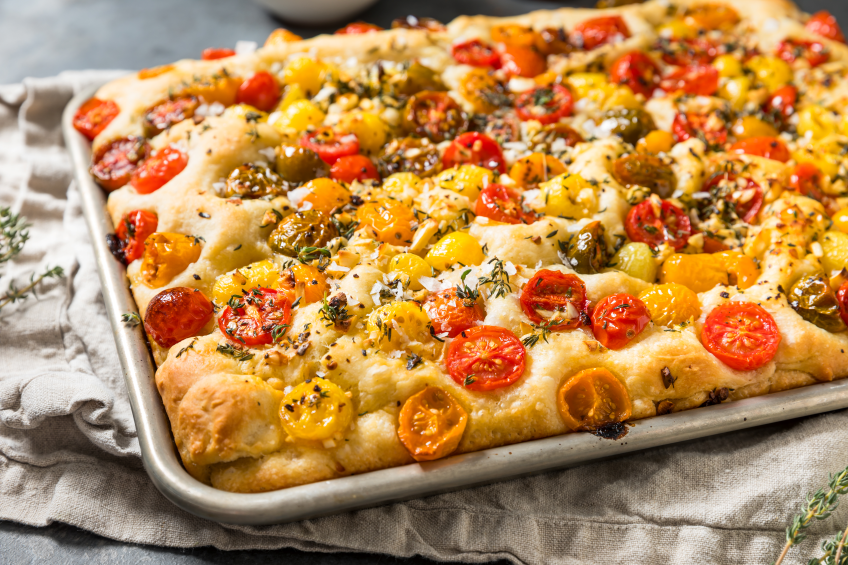
Focaccia stands out for its dimpled top, high olive oil content, and chewy, open crumb. These features result from regional Italian techniques and careful dough handling.
Traditional Italian Focaccia Bread
Tracing back to ancient Rome, focaccia’s name comes from the Latin “focus” (hearth), reflecting its origins as a hearth-baked staple.
Unlike pizza, focaccia is thicker—typically 3/4 to 1.5 inches—and uses more olive oil, both in the dough and as a finishing drizzle. Authentic recipes call for 70–80% hydration (water-to-flour ratio), creating large, irregular air pockets. Finger dimpling before baking helps trap oil and toppings, enhancing flavor and texture.
Essential Characteristics of Focaccia
A well-baked focaccia features a golden, crisp crust and a moist, airy interior. When torn, the crust should crackle and reveal open crumb structure.
Crust color: Deep golden to light brown
Interior: Moist, irregular air pockets
Oil: Visible pooling in dimples
Salt: Coarse sea salt for texture and flavor
Flexibility: Bends slightly without breaking
Release from the pan should be easy, and tapping the bottom should produce a hollow sound—a reliable sign of proper bake, recommended by professional bakers.
Regional and Recipe Variations
Focaccia Genovese (Liguria): Thin, crispy, baked at 450°F for 15–20 minutes, finished with olive oil and salt.
Focaccia Barese (Puglia): Thicker, often topped with cherry tomatoes and olives, and uses a blend of semolina and all-purpose flour for a unique texture.
Focaccia di Recco: Cheese-filled, yeastless, and baked at high heat until the filling bubbles through cracks.
Modern bakers often use overnight cold fermentation for deeper flavor, or rapid same-day methods for convenience. Try both to see which fits your schedule and taste preferences.
Key Ingredients for Homemade Focaccia
Focaccia relies on five essentials: high-protein flour, quality yeast, filtered water, sea salt, and extra virgin olive oil. Each choice impacts texture and flavor.
Importance of Olive Oil and Sea Salt
Extra virgin olive oil is crucial—both in the dough and as a finishing drizzle. For a 9×13-inch pan, use at least 1/4 cup in the dough, plus 2–3 tablespoons on top. The International Olive Council recommends using cold-pressed, robust oils for the best flavor and crust.
Sea salt not only seasons but helps control yeast activity and gluten strength. Use 2 teaspoons in the dough, and finish with Maldon or similar flaky salt before baking for bursts of flavor and crunch.
Choosing the Right Flour
Bread flour (12–14% protein) is preferred for its strong gluten network, creating the signature chew and open crumb. All-purpose flour (10–12% protein) yields a softer, lighter loaf. Avoid low-protein flours, which can cause dense, flat results.
For best results, weigh your flour: 500g (about 4 cups) ensures consistency, as recommended by The Culinary Institute of America.
Role of Yeast and Warm Water
Both instant and active dry yeast work. Use 2 1/4 teaspoons (one standard packet) per 500g flour. Dissolve active dry yeast in 100–110°F water; instant yeast can mix directly with flour. Water above 120°F will kill yeast, stalling your rise.
Use filtered or spring water for purity. For advanced flavor, try a cold, slow rise (refrigeration up to 24 hours) to develop natural yeast aromas, as practiced in top Italian bakeries.
Making Focaccia Dough: Steps and Tips
Professional results require careful hydration, fermentation, and shaping. Here’s a streamlined, expert approach:
Mixing and Hydration
Combine 500g bread flour, 2 teaspoons sea salt, 2 1/4 teaspoons instant yeast, 1/4 cup extra virgin olive oil, and 1 3/4 cups (420ml) warm water. Mix until shaggy—a sticky dough signals high hydration and future air pockets.
Resist adding flour; stickiness is key. Use the “stretch and fold” technique every 20 minutes during the first hour to develop gluten without overworking, as recommended by artisan bakers.
First and Second Rise
Let dough rise in a well-oiled bowl, covered, until doubled (1–2 hours at 75°F). For maximum flavor, refrigerate up to 24 hours, then bring to room temperature before shaping.
After the first rise, gently press into a greased 9×13-inch pan, stretching to the edges. Cover and let rise 30–45 minutes until puffy.
Dimpling and Shaping the Dough
With oiled fingers, press deep dimples across the dough. Drizzle generously with olive oil, letting it pool. Add toppings such as rosemary, cherry tomatoes, or olives now. Varying dimple depth and topping placement creates textural contrast—an insider trick for bakery-quality results.
How Long to Bake Focaccia: Temperatures and Timing
For most home ovens and recipes, bake focaccia at 425°F (220°C) for 20–25 minutes. Thickness, hydration, and pan material can shift this window. For precision, use an instant-read thermometer—industry standard for consistent results.
Standard Oven Baking Time and Temperature
425°F (220°C) for 20–25 minutes yields a golden crust and soft crumb. For thinner Genovese-style, use 400°F for 18–22 minutes to avoid over-browning.
Focaccia is done when the top is golden, the edges pull away from the pan, and the bottom sounds hollow. Check the color around 18 minutes and rotate the pan for even browning.
Pan type: Dark pans bake 2–3 minutes faster; glass or ceramic may require extra time.
Oven accuracy: Always verify temperature with an oven thermometer—Consumer Reports found many home ovens run 10–20°F off.
Dough temperature: Cold dough (from fridge) may need 3–5 extra minutes.
How Thickness and Dough Hydration Affect Baking Time
Thicker focaccia (1.5–2 inches): 25–30 minutes at 425°F.
Thinner focaccia (0.5–1 inch): 18–22 minutes.
High-hydration doughs (75–80%) bake 3–5 minutes longer than standard (65%) due to increased moisture. Always check the center for doneness—underbaked focaccia feels gummy, even if the top is brown.
Using a Thermometer for Doneness
For foolproof results, insert an instant-read thermometer into the center—look for 205–210°F. This ensures the interior is set and safe, matching standards used by America’s Test Kitchen. Check both center and edge; both should be within 5°F for even baking.
Alternative Baking Methods for Focaccia
For a crispier crust, bake focaccia in a preheated cast iron skillet or on a pizza stone. These tools retain and radiate heat evenly, producing superior oven spring and browning—techniques favored by professional bakeries like Tartine in San Francisco.
Dutch Oven and Cast Iron Skillet: Professional Techniques
Cast iron’s high thermal mass—retaining up to 80% more heat than aluminum pans—yields a consistently crisp bottom crust. For optimal results, preheat your cast iron skillet or Dutch oven at 450°F for 15 minutes prior to baking. According to King Arthur Baking, this step is critical for even browning and superior oven spring.
When using a Dutch oven, bake your focaccia covered for the first 15 minutes to trap steam, enhancing the bread’s interior structure. Remove the lid and continue baking for 10-15 minutes until the top is deep golden. This steam method, recommended by professional bakers, mimics the environment of commercial bread ovens.
Generously oil the cookware with at least 2 tablespoons of extra-virgin olive oil before adding dough. This not only prevents sticking but also promotes a shatteringly crisp crust. Expect a total bake time of 20-30 minutes, depending on dough thickness and hydration.
Pizza Stone and Baking Steel: Artisan Bakery Results
A pizza stone or baking steel replicates the bottom heat of wood-fired ovens. For best results, place the stone or steel on the lowest oven rack and preheat at 450°F for a minimum of 30 minutes. Serious Eats testing shows baking steels can cut bake time by up to 20% compared to stones, thanks to their superior heat conductivity.
Shape your focaccia on parchment and slide it directly onto the hot surface. The porous stone extracts excess moisture, creating a crisp base and open crumb. Bake until the internal temperature reaches 200°F (use an instant-read thermometer for accuracy)—typically 20-25 minutes on stone, or 17-22 minutes on steel.
Enhancing Focaccia: Toppings and Finishing Touches
Strategic topping choices elevate focaccia from simple bread to a standout dish. Apply toppings before baking so flavors infuse during the 15-25 minute bake, adjusting for ingredient moisture.
Classic Toppings: Rosemary, Sea Salt, Olive Oil
Traditional focaccia is defined by fresh rosemary, coarse sea salt, and premium olive oil. Use leaves from 2-3 rosemary sprigs, pressing them firmly into the dough’s dimples to maximize aromatic oil release. Drizzle 2-3 tablespoons of high-quality olive oil across the surface; California Olive Ranch EVOO is a top-rated choice for its robust flavor and high smoke point.
Sprinkle 1-2 teaspoons of flaky sea salt (such as Maldon) evenly on top. The large crystals persist through baking, delivering a satisfying crunch and flavor bursts. For best results, oil first, then rosemary, then salt—this sequence preserves the distinct character of each element.
For a gourmet twist, caramelize onions slowly in olive oil for 25-30 minutes until deeply golden—this intensifies sweetness and adds umami depth. Spread evenly over the dough before baking.
Use thinly sliced vegetables (1/4-inch) like cherry tomatoes, bell peppers, or zucchini. Pat dry with paper towels to avoid soggy results; moisture is the leading cause of dense focaccia. For cheese, add during the last 5 minutes of baking to prevent scorching. Top choices include 1/2 cup grated Parmesan, 1 cup torn mozzarella, or 1/4 cup crumbled Gorgonzola.
Expert tip: Wet toppings (e.g., tomatoes) require 20-25 minutes of bake time, while drier toppings finish in 15-20 minutes. Adjust accordingly for best texture.
Expert Tips for Outstanding Focaccia
Press toppings gently into dough dimples to anchor them and prevent burning. Limit total toppings to 1–1.5 cups per 9×13-inch pan; overloading impedes even baking and can cause sogginess. Leave a 1/2-inch border for a professional look and optimal crust formation.
Brush the edge with olive oil for a uniform, golden finish. Always use fresh herbs—studies show they retain 2–3 times more volatile oils than dried, delivering superior aroma and flavor.
Time topping additions for best results: dense items like potatoes should go on at the start, while delicate toppings (e.g., thin garlic slices) are best added 10 minutes into baking. This precision prevents burning and preserves optimal texture.
Serving, Storing, and Enjoying Fresh Focaccia
Proper post-bake handling preserves focaccia’s signature texture and flavor for up to three days.
Cooling and Slicing Techniques
Immediately transfer baked focaccia to a wire rack. Let cool for 10 minutes to set the crumb and maintain crust crispness. Slice with a serrated knife using a gentle sawing motion—this prevents compressing the airy interior. For sandwiches, wait until completely cool before slicing horizontally; this ensures clean, even cuts.
Avoid slicing while hot, as residual steam can make the crumb gummy and compromise the airy structure.
Serving Suggestions
Serve focaccia as an appetizer with extra-virgin olive oil and aged balsamic vinegar—its dimpled surface naturally holds dips. It pairs exceptionally with soups and salads, absorbing broths and dressings without losing integrity.
For sandwiches, focaccia’s sturdy crumb supports fillings like prosciutto, mozzarella, and roasted vegetables. To refresh day-old bread, toast at 350°F for 5 minutes to restore crispness—an expert trick used in Italian bakeries.
Storing and Reheating Focaccia
Short-term storage: For up to 48 hours, loosely wrap your focaccia in foil and store it at room temperature—this preserves the crust’s signature crispness. According to King Arthur Baking, refrigeration accelerates staling by up to 50%, so always avoid the fridge.
Long-term storage: For best results, wrap focaccia tightly in plastic wrap, then a layer of foil, and freeze for up to 3 months. Slice before freezing for easy portion control. Use a vacuum sealer for optimal freshness—America’s Test Kitchen reports vacuum-sealed bread retains flavor and texture 30% better than standard wrapping.
Reheating: Thaw at room temperature for 2–3 hours. To restore the crust, preheat your oven to 350°F and bake for 6–8 minutes until the internal temperature hits 190°F (use an instant-read thermometer for accuracy). For extra crispiness, place focaccia directly on a preheated baking stone or steel. Brush lightly with olive oil before reheating for a bakery-fresh finish.
FAQ: How Long to Bake Focaccia?
Focaccia is a soft, airy Italian bread known for its crisp exterior and rich flavor.
Baking time is key to achieving the perfect texture.
How Long Should You Bake Focaccia?
Focaccia is typically baked for 20–30 minutes at 200–220°C (400–425°F).
The exact time depends on thickness and your oven.
What Temperature Is Best for Baking Focaccia?
The ideal temperature is 200–220°C (400–425°F).
This allows the bread to rise properly while developing a golden, crispy crust.
How Do You Know When Focaccia Is Done?
Focaccia is ready when:
The top is golden brown
The edges are slightly crisp
It sounds hollow when tapped on the bottom
Does Focaccia Thickness Affect Baking Time?
Yes, thicker focaccia takes longer to bake.
Thin focaccia may be ready closer to 20 minutes, while thicker versions may need up to 30 minutes or slightly more.
Can You Overbake Focaccia?
Yes, overbaking can make focaccia dry and hard.
It’s important to check it toward the end of the baking time to avoid this.
Should You Use a Baking Tray or Pan for Focaccia?
Focaccia is usually baked in a well-oiled baking tray or pan.
This helps create its signature crispy bottom and edges.
Can You Bake Focaccia at a Lower Temperature?
You can, but it may take longer and result in a less crispy crust.
Higher temperatures are generally preferred for best results.
Does Topping Affect Baking Time?
Yes, toppings like vegetables or cheese can slightly increase baking time because they add moisture and weight.
Should You Rotate Focaccia While Baking?
Rotating the tray halfway through baking can help ensure even cooking, especially if your oven has hot spots.
Can You Reheat Focaccia Without Drying It Out?
Yes, reheat it in the oven at a low temperature (around 160°C / 320°F) for a few minutes to restore softness without drying it out.

 Focaccia is a classic Italian flatbread prized for its crispy crust and airy crumb. Achieving the perfect bake depends on precise temperature, timing, and attention to dough hydration.
 Focaccia stands out for its dimpled top, high olive oil content, and chewy, open crumb. These features result from regional Italian techniques and careful dough handling.
 Focaccia relies on five essentials: high-protein flour, quality yeast, filtered water, sea salt, and extra virgin olive oil. Each choice impacts texture and flavor.
 Professional results require careful hydration, fermentation, and shaping. Here’s a streamlined, expert approach:
 For most home ovens and recipes, bake focaccia at 425°F (220°C) for 20–25 minutes. Thickness, hydration, and pan material can shift this window. For precision, use an instant-read thermometer—industry standard for consistent results.
 For a crispier crust, bake focaccia in a preheated cast iron skillet or on a pizza stone. These tools retain and radiate heat evenly, producing superior oven spring and browning—techniques favored by professional bakeries like Tartine in San Francisco.
 Strategic topping choices elevate focaccia from simple bread to a standout dish. Apply toppings before baking so flavors infuse during the 15-25 minute bake, adjusting for ingredient moisture.
 Proper post-bake handling preserves focaccia’s signature texture and flavor for up to three days.


