
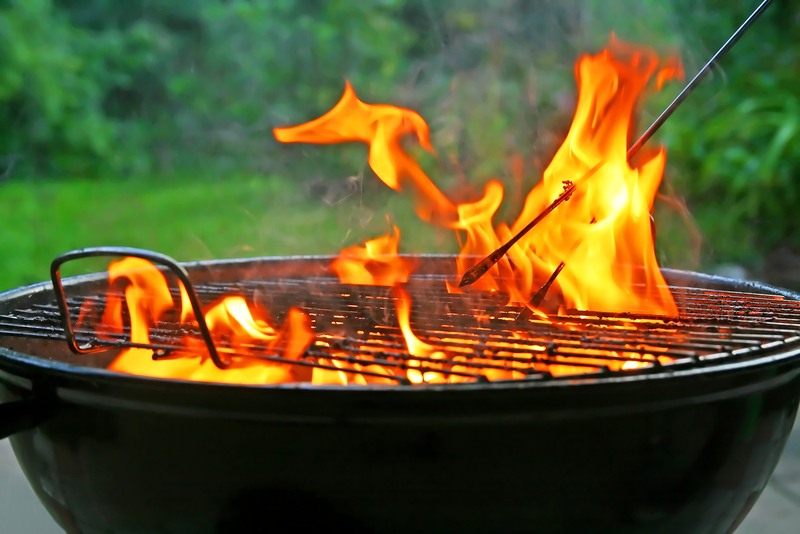

 Charcoal grilling is a popular method of cooking among many people, especially during the summer months.
However, one common problem that grillers face is how to cool off a charcoal grill quickly after cooking.
This is an important issue to address, as leaving a hot grill unattended can pose a serious safety hazard.
There are several methods that can be used to cool off a charcoal grill quickly and safely.
One option is to simply let the grill burn out on its own, but this can take a considerable amount of time.
Another option is to use water to extinguish the flames, but this can also be dangerous if not done properly.
In this article, we will explore some of the most effective and safe methods for cooling off a charcoal grill after use.
Understanding Charcoal Grill Cooling
Safety Precautions
Before attempting to cool down a charcoal grill, it is important to take certain safety precautions.
Firstly, ensure that the grill is placed on a non-flammable surface and away from any flammable materials.
Secondly, wear heat-resistant gloves to avoid any burns.
Lastly, avoid using water to cool the grill as this can cause the charcoal to release steam, which can cause severe burns.
The Science of Charcoal Cooling
The process of cooling down a charcoal grill involves reducing the temperature of the charcoal.
The temperature of the charcoal is directly related to the amount of oxygen that is available to it.
Therefore, to cool down the grill, the supply of oxygen to the charcoal needs to be reduced.
One effective way to do this is by closing the grill’s vents.
By closing the vents, the flow of oxygen to the charcoal is restricted, which will cause the temperature of the charcoal to decrease.
Another way to cool down a charcoal grill is to remove the hot coals and replace them with new, unlit coals.
This will reduce the temperature of the grill and allow it to cool down faster.
It is important to note that trying to cool down a charcoal grill too quickly can be dangerous.
Sudden changes in temperature can cause the grill to crack or even explode.
Therefore, it is recommended to allow the grill to cool down naturally and gradually.
This will ensure that the grill is safe to handle and use in the future.
Immediate Cooling Techniques

When it comes to cooling off a charcoal grill, time is of the essence.
Immediate cooling techniques can be employed to bring down the temperature of the grill quickly and safely.
Dousing With Water
One of the most effective ways to cool off a charcoal grill fast is to douse it with water.
This technique involves pouring water over the hot coals to extinguish them quickly.
It is important to note that this technique should only be used in emergencies and not as a regular method of cleaning the grill.
To douse a charcoal grill with water, use a bucket or hose to pour water over the coals.
Be sure to stand back and avoid getting too close to the grill to prevent injury from steam or splashing water.
Once the coals are extinguished, remove them from the grill and dispose of them properly.
Removing Charcoal
Another way to cool off a charcoal grill quickly is to remove the charcoal from the grill.
This technique involves using tongs or a shovel to remove the hot coals from the grill and transfer them to a metal container.
Once the coals are removed, the grill will begin to cool down rapidly.
It is important to note that this technique should only be used if the coals are still hot but not on fire.
Attempting to remove fully ignited coals can be dangerous and should be avoided.
By employing these immediate cooling techniques, grillers can quickly and safely bring down the temperature of their charcoal grill.
It is important to always prioritize safety when working with hot coals and to never leave a hot grill unattended.
Gradual Cooling Methods
When it comes to cooling off a charcoal grill, gradual methods can be effective in bringing down the temperature without causing any damage to the grill.
Here are a few techniques that can be used for gradual cooling:
Closing Vents and Lid
One of the easiest ways to gradually cool off a charcoal grill is to close the vents and lid.
This will limit the oxygen supply to the coals, which will reduce the temperature of the grill over time.
It is important to note that closing the vents completely will extinguish the fire, so it is recommended to leave them partially open.
By doing so, the temperature will gradually decrease, and the charcoal can be reused for the next grilling session.
Isolating the Grill
Another way to gradually cool off a charcoal grill is to isolate it from the environment.
This can be done by placing the grill in a spot where there is no wind or by using a cover to trap the heat inside.
By isolating the grill, the temperature will decrease slowly, and the charcoal will continue to burn until it is completely extinguished.
This method is especially useful for those who want to reuse the charcoal for the next grilling session.
By using these gradual cooling methods, charcoal grill owners can safely and effectively bring down the temperature of their grill without causing any damage or wasting fuel.
Post-Cooling Procedures

After successfully cooling off a charcoal grill, there are a few important post-cooling procedures that should be followed to ensure the safety and longevity of the grill.
Disposal of Ashes
Once the grill has been fully cooled, the ashes should be disposed of properly.
It is important to never dispose of hot ashes in a plastic or paper bag, as this can lead to a fire.
Instead, use a metal container with a tight-fitting lid to store the ashes until they can be properly disposed of.
It is also a good idea to wet the ashes down with water before disposing of them to ensure that there is no risk of fire.
Cleaning the Grill
After the ashes have been disposed of, it is important to clean the grill thoroughly.
This will help to prevent any buildup of ash or debris that can cause the grill to become clogged or damaged over time.
Start by removing the grates and scrubbing them with a wire brush to remove any leftover food or debris.
Then, use a damp cloth or sponge to wipe down the inside of the grill, being sure to remove any ash or debris that may have accumulated.
For a more thorough cleaning, it may be necessary to remove the ash pan and clean it separately.
This can be done by using a damp cloth or sponge to wipe down the pan, being sure to remove any ash or debris that may have accumulated.
Once the grill has been cleaned, it is important to allow it to dry completely before storing it away.
By following these post-cooling procedures, grill owners can ensure that their charcoal grill remains safe and in good condition for years to come.
Preventive Measures for Future Use
Proper Charcoal Measurement
To prevent the need for cooling off a charcoal grill quickly, it is important to measure the amount of charcoal needed accurately.
Using too much charcoal can cause the grill to become too hot and difficult to control.
On the other hand, using too little charcoal can result in insufficient heat to cook the food properly.
To measure the charcoal accurately, use a measuring cup or a kitchen scale.
A good rule of thumb is to use about 30 charcoal briquettes for a small grill and 50 for a larger one.
It is also important to arrange the charcoal in a single layer to ensure even heating.
Grill Placement Considerations
Another important factor to consider is the placement of the grill.
It is recommended to place the grill in a location that is sheltered from the wind to prevent the charcoal from burning too quickly.
Additionally, it is important to ensure that there is enough clearance around the grill to prevent any fire hazards.
When placing the grill, it is also important to consider the type of surface it is placed on.
A grill should be placed on a level and stable surface to prevent it from tipping over.
It is also recommended to use a heat-resistant mat or a grill pad to protect the surface underneath the grill from heat damage.
By taking these preventive measures, one can avoid the need for cooling off a charcoal grill quickly and ensure a safe and enjoyable grilling experience.