What is the Famous Food of London? The Must-Try Dishes and Culinary Icons
London’s food scene mixes traditional British dishes with influences from around the world.
The most famous foods in London include fish and chips, the full English breakfast, Sunday roast, pie and mash, and afternoon tea.
These classic dishes have been part of the city’s food culture for over a century and remain popular with both locals and visitors today.
The capital’s dining traditions reflect its working-class roots and upper-class customs. Many iconic London foods were created as affordable meals for workers in the 19th century. Others come from formal British traditions like afternoon tea service.
You’ll find everything from historic meat pies to multicultural street food in modern London. This guide covers the savory classics, traditional meal customs, international influences, casual pub fare, and beloved British sweets that define what people eat in this city.
Defining the Famous Food of London
A Full English Breakfast
London’s food identity comes from its working-class roots, multicultural influences, and centuries of culinary tradition. The city’s most recognizable dishes blend hearty British staples with flavors brought by immigrant communities over generations.
What Makes a Food Iconic in London?
A dish becomes iconic in London through widespread availability, historical significance, and cultural adoption by locals. Fish and chips exemplifies this status as it originated in the 19th century as affordable working-class fare and remains the most recognized British meal today.
Accessibility plays a critical role. Foods like beans on toast and the full English breakfast became famous because they’re simple, affordable, and consumed across all social classes. These dishes appear in traditional cafés called “greasy spoons” and upscale restaurants alike.
Cultural staying power matters just as much. Pie, mash, and liquor has endured since the early 1800s in East London, with historic shops such as F. Cooke and M. Manze still operating today.
By contrast, salt beef bagels rose to prominence only in recent decades, yet have achieved iconic status through the 24-hour bagel shops on Brick Lane, where daily queues form outside places like Beigel Bake.
London’s Culinary History and Evolution
British cuisine in London evolved from necessity during industrialization. The 19th century brought fish and chips, pie shops, and jellied eels because these foods used cheap, locally available ingredients that fed factory workers and dock laborers.
Immigration reshaped London food dramatically. Indian and Bangladeshi communities transformed Brick Lane into a hub for curry houses, creating British-Indian fusion dishes like chicken tikka masala. This Scottish-invented dish became synonymous with London through Brick Lane’s influence on the city’s dining culture.
Upper-class traditions also persisted. Afternoon tea, created for wealthy Victorians, became accessible to all Londoners and now serves as both daily tradition and special occasion meal. The Sunday roast follows similar patterns, transitioning from aristocratic dining rooms to neighborhood pubs.
Traditional vs. Modern London Dishes
Traditional British dishes center on meat, potatoes, and simple preparation methods. The full English breakfast combines eggs, bacon, sausages, baked beans, grilled tomatoes, mushrooms, and toast. Sunday roasts feature beef, chicken, pork, or lamb with roast potatoes, vegetables, and gravy.
Modern London food reflects global influences while maintaining local character. Chicken tikka masala represents British-Indian fusion, while salt beef bagels blend Jewish culinary traditions with London’s bagel culture. Both dishes are now considered authentic London foods despite their recent adoption.
Classic British dishes increasingly offer contemporary variations. Many pubs serve nut roasts as vegetarian Sunday roast alternatives. Afternoon tea venues now include Prosecco alongside traditional English breakfast tea. These adaptations preserve the essence of traditional British cuisine while meeting current dietary preferences.
Classic Savory Dishes You Must Try
Traditional British Food – Fish and Chips
London’s savory food scene centers on hearty, traditional dishes that have fed locals for generations. These meals combine simple ingredients in ways that deliver bold flavors and lasting satisfaction.
Fish and Chips: The Quintessential London Dish
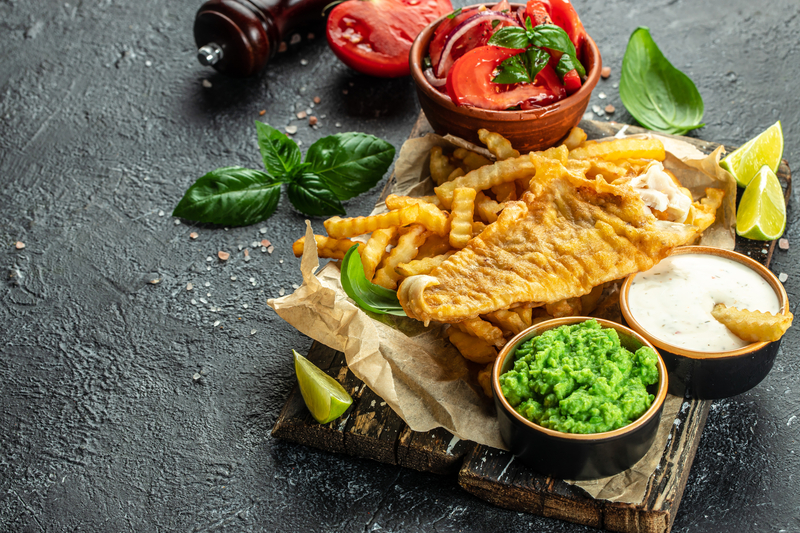
Fish and chips stands as Britain’s most recognized dish. You get a piece of white fish, typically cod or haddock, coated in a crispy batter and deep-fried until golden. The chippy serves it alongside thick-cut chips.
The meal comes wrapped in paper, often with mushy peas on the side. You’ll find malt vinegar and salt on every table. The batter should crack when you bite into it, revealing tender, flaky fish inside.
London has hundreds of fish and chip shops. Look for places that use fresh fish daily and cook in vegetable oil. The best versions maintain a light, crisp coating without excess grease. Many shops now offer sustainable fish options.
Full English Breakfast: A Hearty Start
The full English breakfast provides enough food to fuel your entire morning. Your plate arrives loaded with fried eggs, bacon, sausages, baked beans, grilled tomatoes, and mushrooms. Toast or fried bread sits on the side.
Traditional versions include black pudding, a blood sausage with a rich, earthy taste. Some places add bubble and squeak, which is leftover vegetables and potatoes fried together. Hash browns appear on modern versions.
The Breakfast Club serves reliable full English breakfasts across multiple London locations. You can order this meal any time of day at many cafes. Each component should be cooked properly without running together on the plate.
Pie and Mash: East End Tradition
Pie and mash started as working-class food in London’s East End. You get a meat pie filled with minced beef, served with mashed potatoes and parsley liquor. The green sauce contains parsley, not alcohol.
Manze’s has operated since 1902, making it one of London’s oldest pie shops. The pies use a shortcrust pastry that holds together without becoming soggy. The filling should be well-seasoned and substantial.
This dish costs less than most London meals. Traditional shops keep their original tile walls and wooden benches. The liquor sauce adds a unique herbal note you won’t find elsewhere.
Bangers and Mash: Comfort on a Plate
Bangers and mash pairs grilled pork sausages with creamy mashed potatoes. Rich onion gravy covers both components. The name “bangers” comes from the sound sausages made during wartime rationing when they contained extra water.
Quality versions use thick pork sausages with high meat content. The mash should be smooth with butter and cream mixed in. The gravy needs proper depth from slowly cooked onions and stock.
Mother Mash specializes in this dish with multiple sausage and mash combinations. You can choose from different sausage types and gravy flavors. Pubs across London serve their own versions, making it easy to find.
London’s Iconic Meals and Traditions
Beef Wellington, a Classic English Dish
London’s food culture centers on meals that bring people together at specific times and places, from weekly family gatherings to daily rituals that shape the city’s eating patterns. These traditions blend British heritage with international influences that have become essential to London’s identity.
Sunday Roast: A Weekend Staple
The Sunday roast remains Britain’s most beloved communal meal, and in London it is a fixture of weekends across the city. Traditionally served on Sundays, the meal centers on roasted meat—most commonly beef, lamb, chicken, or pork—paired with crisp roast potatoes, Yorkshire pudding, seasonal vegetables, and generous amounts of gravy.
Rooted in the custom of enjoying a hearty meal after church services, the Sunday roast has evolved into a social ritual that brings families and friends together.
Today, London offers everything from classic pub versions to refined interpretations in high-end dining rooms. One standout is The Harwood Arms, a Michelin-starred pub celebrated for its expertly cooked roasts and commitment to high-quality British ingredients.
Alongside the traditional roast, London menus often feature other iconic British dishes that mark special occasions—most notably Beef Wellington, a show-stopping centerpiece of beef fillet wrapped in mushrooms and pastry, symbolizing the city’s flair for elevating comfort food into culinary ceremony.
Classic Sunday roast elements include:
Roasted meat (beef, lamb, chicken, or pork)
Crispy roast potatoes
Yorkshire pudding (savory baked batter)
Seasonal vegetables (such as carrots, parsnips, peas, or Brussels sprouts)
Rich gravy made from meat drippings
Optional sides: cauliflower cheese or stuffing
Together, these dishes capture the essence of London’s food traditions—familiar, communal, and deeply tied to time, place, and shared experience.
Afternoon Tea: Timeless Elegance
Afternoon tea represents London’s most refined dining tradition. You’ll receive a tiered stand presenting finger sandwiches, scones with clotted cream and jam, and delicate pastries, all served with premium tea selections.
Fortnum & Mason has served afternoon tea since 1707, maintaining exacting standards for this tradition. The Ritz offers afternoon tea in its Louis XVI-decorated dining room, while The Wolseley provides a grand café setting on Piccadilly. The Savoy continues its legacy with afternoon tea service that matches its historic reputation.
The service typically occurs between 3 PM and 5 PM. You should expect to spend 90 minutes to two hours enjoying this meal, which serves as a light substitute for lunch and dinner combined.
Brick Lane Curry and Global Influence
Brick Lane transformed London’s food landscape by establishing the city’s most concentrated curry corridor. You’ll find Bangladeshi restaurants lining this East London street, serving dishes that reflect South Asian immigration patterns from the 1970s onward.
The area’s curry houses developed Britain’s signature dish: chicken tikka masala, a creamy tomato-based curry adapted specifically for British tastes. These establishments operate late into the night, serving both local residents and visitors seeking authentic flavors.
This concentration of South Asian cuisine demonstrates how immigrant communities shaped London’s food identity. The Brick Lane experience extends beyond individual restaurants to create a distinct dining district.
Salt Beef Bagel and the London Beigel
Beigel Bake and operates 24 hours on Brick Lane, serving London’s iconic salt beef bagel. You’ll receive thick-cut salt beef (British-style pastrami) piled into a freshly baked bagel with mustard and pickles.
This shop emerged from London’s Jewish community in the East End. The bagels are boiled then baked using traditional methods, creating a chewy texture distinct from American-style bagels.
You can visit at any hour to find locals and night workers queuing for this filling meal. The salt beef is cured for days, then steamed until tender. A single bagel costs under £6, making it one of London’s best-value iconic foods.
Multicultural Flavors Shaping London’s Food Scene
Fry Street Oriental Food – Indian Takeaway at a London`s Market
London’s food identity reflects waves of immigration and global trade that have transformed the city into one of the world’s most diverse culinary capitals. Indian, Chinese, Caribbean, Middle Eastern, and African cuisines now sit alongside traditional British fare, creating a food landscape where international dishes have become part of the city’s core identity.
Chicken Tikka Masala and Indian Influence
Indian cuisine has become central to London’s food culture. Chicken tikka masala, often called Britain’s national dish, emerged from the fusion of British and Indian culinary traditions and remains one of the most ordered dishes across the city.
Brick Lane in East London serves as the historic heart of London’s curry scene. The area’s restaurants offer everything from traditional Punjabi dishes to Bengali specialties. You can find dozens of curry houses along this stretch, each competing to serve the best version of classic dishes.
The Indian food scene extends beyond curry houses. Dishoom recreates Bombay café culture with updated versions of traditional dishes, while Gymkhana offers Indian fine dining with a focus on regional specialties and refined techniques. These establishments have elevated Indian cuisine to match London’s high-end dining standards.
Dim Sum and Chinatown’s Contribution
Chinatown in Soho represents one of London’s oldest and most established international food communities. The neighborhood’s restaurants serve authentic Cantonese cuisine, with dim sum as the signature offering. You can find steamed dumplings, bao buns, spring rolls, and other small plates served from bamboo steamers.
Dim sum restaurants in Chinatown operate throughout the day, though weekend mornings draw the largest crowds. The communal dining style and variety of dishes make it a practical way to sample multiple flavors in one meal.
Chinese influence extends beyond Chinatown. Peking duck remains a popular celebratory dish, while hand-pulled noodles and regional specialties from Sichuan and Hunan provinces have gained strong followings across London’s neighborhoods.
Modern Street Food Destinations
Borough Market stands as London’s premier food market. The market offers international cuisines from over 100 stalls, including Middle Eastern mezze, Spanish tapas, and Mexican tacos. The quality level at Borough Market exceeds typical street food standards, with many vendors using restaurant-grade ingredients and techniques.
Camden Market provides another major street food hub. You can find everything from falafel wraps to Vietnamese pho to Caribbean jerk chicken. The market’s layout allows you to compare different cuisines within a compact area.
Brick Lane Market combines the area’s curry house tradition with newer street food offerings. Weekend markets bring additional vendors selling foods from Bangladesh, Pakistan, and other South Asian countries alongside bagel shops that reflect the area’s Jewish heritage.
Fusions and New Classics
London’s food scene produces new combinations that blend multiple culinary traditions. Banh mi sandwiches combine Vietnamese ingredients with French baguettes, while restaurants across the city experiment with cross-cultural techniques and flavor profiles.
These fusion dishes often become foods to try in London in their own right. Salt beef bagels from Brick Lane merge Jewish deli traditions with British preferences. Piri-piri chicken from Portuguese-Mozambican restaurants has spread throughout London’s neighborhoods.
The constant evolution means new classics emerge regularly. Turkish döner kebabs, Lebanese shawarma, and Jamaican patties have all transitioned from ethnic specialties to mainstream options found across the city.
Beloved Snacks, Pub Grub, and Street Eats
English Scotch Eggs
London’s casual food scene includes traditional pub classics and portable snacks that locals eat daily. These dishes range from handheld pastries to hearty plates served in neighborhood pubs across the city.
Scotch Egg and English Bar Snacks
Scotch eggs feature hard-boiled eggs wrapped in seasoned sausage meat, coated with breadcrumbs, and fried or baked until golden. Fortnum and Mason claims to have invented this dish in 1738, though historians debate the exact origin.
You can find scotch eggs at most pubs and markets throughout London. They work well as a quick lunch or snack between meals.
Other popular bar snacks include cheese toasties, which are similar to grilled cheese sandwiches but traditionally baked in an oven. Kappacasein at Borough Market serves one of London’s most popular versions, often with long queues during peak hours.
Pork pies and sausage rolls also appear on pub menus across the city. These pastry-wrapped items provide filling options when you want something more substantial than crisps.
Toad in the Hole and British Pies
Toad in the hole combines sausages baked into Yorkshire pudding batter and served with onion gravy. Despite the unusual name, this dish contains no actual toads. You’ll find it on many pub menus as a weeknight dinner option.
British pies come in many varieties. Cornish pasty contains beef, potato, swede, and onion wrapped in pastry with a distinctive crimped edge. Steak and kidney pie, chicken and mushroom pie, and cheese and onion pie also appear frequently.
Traditional pie and mash shops serve minced beef pies with mashed potatoes and parsley liquor (a thin green sauce). M Manze and Arments represent the old-school style with tiled walls and counter service.
You can also try modern versions at Pieminister in Borough Market or other contemporary establishments.
Shepherd’s Pie, Ploughman’s Lunch, and Beyond
Shepherd’s pie contains ground lamb and vegetables in gravy, topped with mashed potatoes and baked until the top turns golden brown. When made with beef instead of lamb, it becomes cottage pie.
This dish appears on pub menus throughout London and works particularly well during cold weather. The Ivy serves a version made with slow-braised lamb and beef in red wine sauce.
Ploughman’s lunch provides a cold meal of cheese, bread, pickles, and onions, sometimes with ham, boiled eggs, or tomatoes added. It showcases British cheeses like Cheddar, Stilton, Red Leicester, or Double Gloucester.
Sausage and mash (also called bangers and mash) features Cumberland or pork sausages served over mashed potatoes with onion gravy. Nicholson’s Pubs serve reliable versions, including The Blackfriar and The Horniman at Hays. Mother Mash specializes specifically in variations of this dish.
Famous British Desserts to Savor in London
Tradional English Scones
London offers traditional British desserts that range from warm, date-filled puddings to layered cream confections. You’ll find both historic recipes and regional specialties across the city’s bakeries and restaurants.
Scones with Clotted Cream and Jam
Scones with clotted cream and jam are a quintessential British tea-time treat. These small, round cakes are made with flour, butter, and sugar and are traditionally served with clotted cream and jam.
The clotted cream is a thick, creamy spread made from heating and cooling heavy cream, while the jam is typically strawberry or raspberry. The scones are best served warm and are perfect for a mid-afternoon snack.
Both of these desserts are popular in London and can be found in many cafes and restaurants throughout the city. They are a must-try for anyone visiting London and looking to indulge in traditional British sweets.
Sticky Toffee Pudding and Sweet Icons
Sticky toffee pudding stands as one of Britain’s most beloved desserts. The dish features a moist sponge cake made with finely chopped dates, covered in warm toffee sauce and often served with vanilla ice cream or clotted cream.
Eton mess provides a lighter option with its combination of crushed meringue, whipped cream, and fresh strawberries. The dessert originated at Eton College and remains popular at London cafes during summer months.
Trifle layers sponge cake, fruit, custard, and whipped cream in a glass bowl. This traditional dessert appears at British celebrations and Sunday dinners throughout London.
Victoria sponge cake consists of two layers of light sponge filled with jam and cream. The cake was named after Queen Victoria and represents classic British baking at its simplest.
Bread and Butter Pudding, Crumpets, and Cakes
Bread and butter pudding transforms leftover bread into a comforting dessert. Sliced bread gets layered with raisins, soaked in custard, and baked until golden. London pubs and traditional restaurants serve this warming pudding year-round.
Crumpets appear on breakfast and tea menus across the city. These griddle cakes have distinctive holes that soak up butter and jam. You can find fresh crumpets at markets and bakeries throughout London.
Banoffee pie combines bananas, toffee, and cream in a biscuit base. While not ancient, this dessert has become a British standard since the 1970s.
Apple crumble features stewed apples topped with a buttery, crumbly mixture of flour, sugar, and butter. Restaurants serve it hot with custard or ice cream, particularly during autumn and winter.
Regional and Modern Dessert Specialties
Bakewell tart originated in Derbyshire but has become widely available across London. The dessert uses shortcrust pastry filled with jam and almond-flavored sponge, sometimes topped with icing and flaked almonds.
Spotted dick is a traditional steamed pudding made with suet and studded with currants or raisins. The name refers to the spots created by the dried fruit. You’ll find this historic dessert at traditional British restaurants.
Modern London bakeries now create contemporary versions of classic desserts. Sticky toffee pudding brownies merge two favorites into one treat. Gourmet doughnuts feature British-inspired fillings like salted caramel and custard. Some establishments offer vegan and gluten-free versions of traditional desserts to accommodate different dietary needs.