Can You Eat Tuna While Pregnant? Safety, Types, and Guidelines
Pregnancy brings heightened awareness to food safety, especially regarding seafood like tuna. Tuna is a rich source of lean protein and omega-3 fatty acids—critical for fetal brain development—but its mercury content raises valid concerns.
According to the CDC, mercury exposure is the leading cause of preventable neurodevelopmental deficits in children. Knowing exactly which types of tuna are safest, and in what quantities, is essential for minimizing risk while maximizing nutritional benefit.
Yes, you can eat tuna while pregnant, but only certain types and in specific amounts.
The FDA and EPA recommend canned light tuna (mainly skipjack) as a low-mercury choice, safe for 2–3 servings (8–12 ounces) per week. In contrast, albacore (“white”) tuna should be limited to one 4–6 ounce serving weekly due to its higher mercury content. Bigeye tuna is not considered safe during pregnancy and should be avoided entirely.
This evidence-based guide details which tuna types are safest, how mercury impacts fetal development, and precise serving sizes recommended by leading health authorities.
You’ll also find actionable strategies for integrating tuna into your pregnancy diet, expert tips for minimizing risk, and the latest research-backed insights on seafood safety.
Is It Safe to Eat Tuna While Pregnant?
Eating tuna during pregnancy is safe when you select low-mercury varieties and adhere to strict portion guidelines. Both the FDA and EPA revised their advice in 2017 after a comprehensive review of over 110 studies, emphasizing that the nutritional benefits of fish—especially for fetal neurodevelopment—outweigh potential mercury risks when the right species and amounts are chosen.
General Safety Guidelines
Canned light tuna (skipjack): Classified as a “best choice,” safe for 2–3 servings (4 ounces each) per week. One drained can typically equals one serving.
Albacore/white tuna and yellowfin: “Good choices,” limit to one 4-ounce serving per week. Bigeye tuna: Must be avoided due to consistently high mercury levels (0.64 ppm on average).
Always eat tuna fully cooked or canned—never raw—to prevent listeriosis, salmonellosis, and other foodborne illnesses. For fresh-caught tuna, consult local advisories, as mercury levels can vary widely by region (EPA Fish Consumption Advisories Database).
Pairing tuna with vitamin C-rich produce (e.g., red bell peppers, oranges) boosts non-heme iron absorption—a critical nutrient during pregnancy. Rotate tuna with other low-mercury fish such as salmon, sardines, and pollock to diversify nutrient intake and further reduce mercury risk.
Current Recommendations from Health Authorities
The FDA and EPA categorize fish into three groups by mercury content. Pregnant and breastfeeding people are advised to consume 8–12 ounces weekly from the “best choices” category.
The 2020–2025 Dietary Guidelines for Americans reinforce these targets, specifically highlighting the role of fish in supporting fetal cognitive and visual development.
After 2004, policy shifted from avoidance to moderation, following meta-analyses showing that children of mothers who ate low-mercury fish during pregnancy scored up to 5.8 points higher on cognitive tests (Lancet, 2007). The focus is now on species selection and precise portion control.
Risks Associated with Tuna Consumption
Mercury bioaccumulates in large, long-lived fish, posing a direct threat to fetal neural development. Prenatal mercury exposure is linked to lower IQ, impaired memory, and motor delays, with effects documented at blood mercury levels as low as 3.5 µg/L (NEJM, 2003).
Warning signs of mercury toxicity include numbness, visual disturbances, and speech difficulties. If you notice these symptoms after eating fish, contact your healthcare provider without delay.
Raw or undercooked tuna is a leading cause of seafood-related listeriosis outbreaks in the U.S. (CDC, 2022). Additionally, tuna can harbor environmental contaminants such as PCBs and microplastics. Choose sustainably certified brands (e.g., MSC, BPA-free cans) to minimize exposure to both mercury and other toxins.
Understanding Mercury and Pregnancy
Mercury is a potent neurotoxin that crosses the placenta, directly impacting fetal brain and nervous system development. The type and amount of tuna you eat determines your exposure risk.
What Is Mercury?
Mercury is a naturally occurring heavy metal, but industrial sources—especially coal-fired power plants—are now the main contributors to mercury in water. Once released, mercury is converted by aquatic bacteria into methylmercury, the highly toxic form found in fish.
Unlike fat-soluble toxins, mercury accumulates in muscle tissue and cannot be removed by cooking or trimming. The human body eliminates methylmercury slowly, with a half-life of about 50 days, so repeated exposure leads to accumulation—especially concerning during the 40-week gestational period.
Effects of Mercury on Fetal Development
Even moderate prenatal mercury exposure can disrupt neuronal migration and synapse formation, key processes in fetal brain development. The CDC reports that fetal blood mercury concentrations can be up to 70% higher than maternal levels, due to active placental transfer.
Peer-reviewed studies link elevated maternal mercury to lower verbal, attention, and fine-motor scores in children (JAMA Pediatrics, 2013). The risk is greatest in the second trimester, when neurogenesis peaks. Vision and auditory pathways are also susceptible to damage from in utero mercury exposure.
How Mercury Accumulates in Tuna
Mercury levels in tuna are determined by species, age, and diet. Larger and older tuna accumulate more mercury via biomagnification, as each predator consumes many smaller contaminated fish.
Average Mercury Levels by Tuna Type (FDA, 2022):
Canned light tuna (skipjack): 0.12 ppm
Albacore/white tuna: 0.32 ppm
Yellowfin tuna: 0.35 ppm
Bigeye tuna: 0.64 ppm
Skipjack (canned light) are small (up to 40 lbs), short-lived (8–12 years), and feed low on the food chain, resulting in far less mercury. Bigeye and yellowfin can exceed 400 lbs and live 15+ years—making their flesh far riskier for pregnant consumers.
Types of Tuna: Which Are Safe During Pregnancy?
Mercury content varies dramatically by tuna species. For pregnant women, only skipjack/canned light tuna is considered low risk. Albacore, yellowfin, and especially bigeye require stricter limits or complete avoidance.
Canned Light Tuna and Skipjack Tuna
Canned light tuna—composed mainly of skipjack—contains the lowest mercury of any tuna commonly sold. According to Consumer Reports (2022), 94% of tested canned light tuna samples fell below 0.12 ppm mercury.
This makes it the preferred choice for pregnant women prioritizing both safety and nutrition.
Consume up to 12 ounces (2–3 servings) per week. Look for labels specifying “skipjack” or “light” tuna, as these are not interchangeable with “white” or “albacore.” Skipjack is also higher in selenium, a mineral shown to help counteract mercury toxicity.
Albacore and White Tuna
Albacore (“white”) tuna averages nearly three times the mercury of skipjack. The American Pregnancy Association and FDA both recommend a maximum of 6 ounces per week for albacore. This is equivalent to one standard can or a small tuna steak.
Albacore is typically labeled as “white” or “solid white” tuna. It is firmer, lighter in color, and more expensive than canned light tuna. If you choose albacore, do not eat any other high-mercury fish that week.
Yellowfin and Other Varieties
Yellowfin tuna’s mercury content is similar to albacore. Limit to 6 ounces per week if consumed. Bigeye tuna, which is sometimes used in sushi and sashimi, contains the highest mercury levels and should be strictly avoided during pregnancy.
All raw tuna—including sushi, sashimi, and poke bowls—should be off-limits due to bacterial and parasitic risks. The CDC has documented listeria outbreaks linked to raw tuna, which can cause miscarriage or severe neonatal illness.
Fresh Tuna Versus Canned Tuna
Fresh tuna steaks are typically cut from larger, older fish (yellowfin, bigeye, albacore), and thus contain more mercury than canned light tuna. A single restaurant portion can exceed weekly safe limits.
The FDA’s testing confirms that canned light tuna is consistently lower in mercury and offers more predictable safety for pregnant women.
Unless the species is clearly labeled (as “skipjack” or “canned light”), fresh tuna should be limited or avoided. When in doubt, choose canned light tuna for reliable safety and nutrient content.
Recommended Portions and Serving Frequency
Strict portion control is essential.
Both the FDA and leading OB-GYNs recommend the following:
Canned light tuna (skipjack): 8–12 ounces (2–3 servings) per week.
Albacore (white) tuna: No more than 4–6 ounces (1 serving) per week.
Yellowfin: Same as albacore—limit to 6 ounces per week. Bigeye: Avoid completely.
A standard serving is 4 ounces (about one drained can or the size of your palm). Use a kitchen scale or pre-portioned cans to track intake precisely. Exceeding these limits increases risk of mercury accumulation, which can persist in the body for months.
Balancing Tuna with Other Fish in Pregnancy
To optimize nutrition while minimizing mercury, rotate tuna with other low-mercury seafood. Top alternatives include wild salmon, sardines, Atlantic mackerel, pollock, and shrimp—all of which are scored “best choices” by the FDA and provide essential DHA for fetal brain development.
If you consume albacore or yellowfin in a given week, avoid all other high-mercury fish. For the remainder of your seafood intake, choose only low-mercury options. Avoid shark, swordfish, king mackerel, and tilefish entirely, as these species routinely exceed safe mercury thresholds (FDA, 2022).
For meal planning, consider using the Monterey Bay Aquarium Seafood Watch app to identify the safest and most sustainable seafood options available in your area. This ensures you receive a full spectrum of omega-3s and protein, while safeguarding your baby’s long-term health.
Nutritional Benefits of Tuna for Pregnancy
Tuna is a powerhouse protein source during pregnancy, delivering 22 grams per 3.5-ounce (100g) serving—about one-third of the daily protein requirement for most pregnant women, according to the USDA.
This same serving of canned light tuna provides over 100% of the recommended daily intake of vitamin B12, a nutrient critical for fetal neural development and maternal energy levels (source).
Omega-3 Fatty Acids and Fetal Development
Each 3.5-ounce portion of canned light tuna contains approximately 197 mg of DHA and 25 mg of EPA, based on USDA FoodData Central analysis. These levels can fulfill 63–100% of the daily omega-3 recommendations for pregnancy set by the American Pregnancy Association, which suggests at least 200 mg DHA per day.
DHA is especially vital in the second and third trimesters, when your baby’s brain and retina develop rapidly. Clinical trials published in the American Journal of Clinical Nutrition show that women who meet omega-3 targets during pregnancy lower their risk of early preterm birth by up to 42% and support higher cognitive scores in their children at age 4.
Emerging evidence also links adequate maternal omega-3 intake to a reduced risk of postpartum depression and a 30% lower likelihood of childhood eczema and food allergies, according to longitudinal cohort studies in JAMA Pediatrics.
Protein and Other Essential Nutrients
Tuna stands out for its complete amino acid profile, supporting fetal tissue growth and maternal muscle maintenance. One serving covers 32% of daily protein needs for pregnant women, per CDC guidelines.
Canned light tuna delivers 9% of your daily iron, helping prevent anemia—a condition affecting 15–20% of pregnant women in the US, per CDC surveillance. Iron is essential for fetal brain oxygenation and healthy nervous system formation.
In addition to 107% of daily vitamin B12, tuna provides 4 IU of vitamin D per serving. While modest, this can help bridge the gap for the 70% of pregnant women who fall short on vitamin D, as documented in the American Journal of Obstetrics & Gynecology. Vitamin D is vital for fetal bone mineralization and immune system maturation.
Comparing Tuna to Other Seafood Options
Mercury content and nutrient density vary widely among seafood. Skipjack tuna (the main species in canned light tuna) averages just 0.12 ppm mercury, according to FDA monitoring, compared to 0.32 ppm in albacore and over 1.0 ppm in bigeye tuna.
Anchovies, cod, and trout are low-mercury alternatives but typically deliver less DHA per serving (anchovies: 129 mg DHA; cod: 63 mg DHA per 3.5 oz). Salmon, while higher in omega-3s (over 1,200 mg DHA+EPA per serving), is often two to three times more expensive than canned light tuna, based on USDA retail pricing data.
The FDA and EPA recommend up to 12 ounces of canned light tuna weekly for pregnant women, while limiting albacore to 4–6 ounces. This flexibility makes light tuna a practical, budget-friendly way to meet seafood and omega-3 targets without exceeding mercury limits.
Precautions and Tips for Eating Tuna Safely
Maximizing tuna’s nutritional advantages during pregnancy hinges on choosing low-mercury products, practicing safe food handling, and verifying sourcing. These steps are endorsed by leading authorities including the FDA, EPA, and American College of Obstetricians and Gynecologists.
Choosing the Right Tuna Products
Opt for canned light tuna (Skipjack species), which consistently tests lowest for mercury—verified by independent labs and consumer watchdogs like Consumer Reports. This allows for 8–12 ounces per week within safety guidelines.
Strictly limit albacore (white) tuna and fresh tuna steaks to 4–6 ounces weekly. Completely avoid bigeye tuna, which ranks among the highest in mercury according to FDA data.
For extra safety, select brands such as Safe Catch, which test every fish for mercury and publish results. When possible, buy from retailers or fishmongers who can provide traceability and supply-chain transparency. Ask about storage temperatures (below 40°F) and harvest location—US and Canadian fisheries follow stricter mercury monitoring protocols than many imports.
Safe Preparation and Cooking Methods
Cook tuna to an internal temperature of 145°F, as recommended by the USDA, to eliminate bacteria and parasites. The fish should be opaque and flake easily with a fork—signs of proper doneness.
Never consume raw or undercooked tuna (sushi, sashimi, poke, ceviche) during pregnancy. The CDC reports that pregnant individuals are 10–20 times more likely to contract Listeria, which can cause miscarriage or severe neonatal infection.
Prepare tuna salad at home using freshly opened cans and consume within 3–4 days, stored below 40°F. Avoid deli-made salads, which may sit at unsafe temperatures or contain cross-contaminants. For added safety, use a food thermometer and keep a log of fridge temperatures (many home refrigerators run warmer than recommended—test with a digital thermometer).
How to Read Tuna Labels Like a Nutritionist
Monitor Sodium Levels with Precision: According to the USDA, some canned tuna brands contain up to 350mg of sodium per 2-ounce serving—over 15% of the recommended daily limit for adults. If you consume canned tuna three times a week, you could be ingesting more than 1,000mg of sodium just from tuna alone.
Registered dietitians recommend choosing “no salt added” or “low sodium” options and rinsing canned tuna under water, which can reduce sodium content by up to 80mg per serving (Harvard T.H. Chan School of Public Health).
Prioritize Water-Packed Tuna for Heart Health: Water-packed tuna typically contains 50-100 fewer calories per serving compared to oil-packed varieties. Oil-packed tuna often uses soybean or sunflower oil, which can add up to 5g of fat per serving—without increasing omega-3 content.
For maximum nutritional benefit, select “in water” options and scan for brands that specify “wild-caught” on the label, as these are more likely to have higher omega-3 concentrations (Environmental Defense Fund).
Identify Tuna Species to Manage Mercury Risk: The FDA warns that albacore (“solid white”) tuna contains nearly three times more mercury than skipjack (“chunk light”) varieties—averaging 0.32 ppm versus 0.12 ppm. For families and pregnant individuals, experts from the American Pregnancy Association recommend limiting albacore consumption to one serving per week, while chunk light tuna can be safely eaten up to three times weekly.
Always check for third-party certifications like MSC (Marine Stewardship Council) to ensure sustainability and traceability.
FAQ: Can You Eat Tuna While Pregnant?
Tuna is a popular and nutritious fish, but many people have concerns about eating it during pregnancy.
Can You Eat Tuna While Pregnant?
Yes, you can eat tuna while pregnant—but in moderation.
Tuna contains important nutrients, but it can also have mercury, so portion control is key.
Is Tuna Safe During Pregnancy?
Tuna can be safe if you follow recommended limits.
Choosing the right type of tuna and not exceeding weekly guidelines is important.
How Much Tuna Can You Eat While Pregnant?
General guidelines suggest:
Up to 2–3 servings (low-mercury tuna like light tuna) per week
Limit higher-mercury tuna (like albacore) to about 1 serving per week
Always follow local health recommendations where possible.
Which Type of Tuna Is Best During Pregnancy?
Light tuna (canned): Lower in mercury, safer option
Albacore (white tuna): Higher in mercury, eat less frequently
Fresh tuna (e.g., steak): Often higher in mercury—limit intake
Why Is Mercury a Concern During Pregnancy?
Mercury can affect a baby’s developing brain and nervous system.
That’s why it’s important to limit high-mercury fish.
Can You Eat Tuna Every Day While Pregnant?
No, it’s not recommended. Eating tuna every day may lead to excessive mercury intake.
Stick to weekly limits instead.
Is Canned Tuna Safe for Pregnant Women?
Yes, canned light tuna is generally considered safe in moderate amounts and is one of the more commonly recommended options.
Are There Benefits to Eating Tuna During Pregnancy?
Yes, tuna provides:
Protein
Omega-3 fatty acids
Important nutrients for baby development
What Are Safer Alternatives to Tuna?
If you want to reduce mercury exposure, consider:
Salmon
Sardines
Trout These are typically lower in mercury and rich in nutrients.
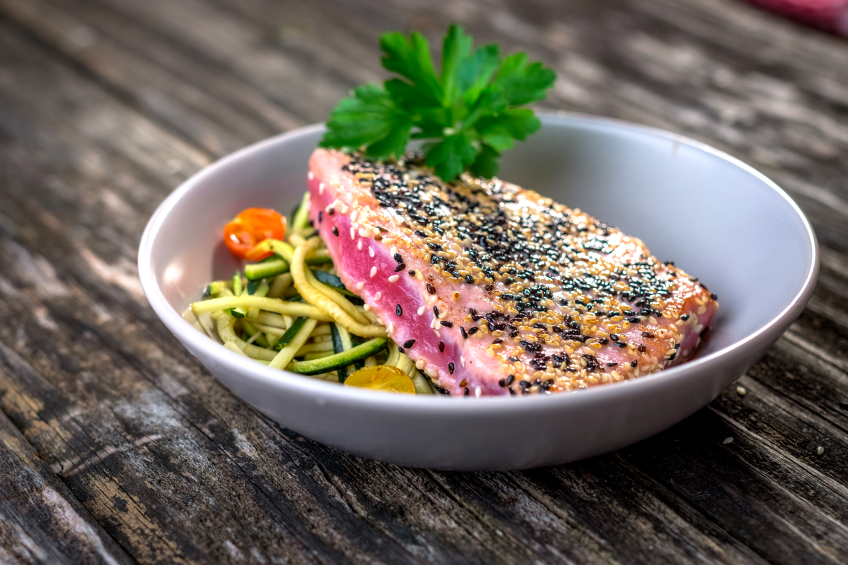

 Pregnancy brings heightened awareness to food safety, especially regarding seafood like tuna. Tuna is a rich source of lean protein and omega-3 fatty acids—critical for fetal brain development—but its mercury content raises valid concerns.
 Eating tuna during pregnancy is safe when you select low-mercury varieties and adhere to strict portion guidelines. Both the FDA and EPA revised their advice in 2017 after a comprehensive review of over 110 studies, emphasizing that the nutritional benefits of fish—especially for fetal neurodevelopment—outweigh potential mercury risks when the right species and amounts are chosen.
 Mercury is a potent neurotoxin that crosses the placenta, directly impacting fetal brain and nervous system development. The type and amount of tuna you eat determines your exposure risk.
 Mercury content varies dramatically by tuna species. For pregnant women, only skipjack/canned light tuna is considered low risk. Albacore, yellowfin, and especially bigeye require stricter limits or complete avoidance.
 Strict portion control is essential.
 Tuna is a powerhouse protein source during pregnancy, delivering 22 grams per 3.5-ounce (100g) serving—about one-third of the daily protein requirement for most pregnant women, according to the USDA.
 Maximizing tuna’s nutritional advantages during pregnancy hinges on choosing low-mercury products, practicing safe food handling, and verifying sourcing. These steps are endorsed by leading authorities including the FDA, EPA, and American College of Obstetricians and Gynecologists.


