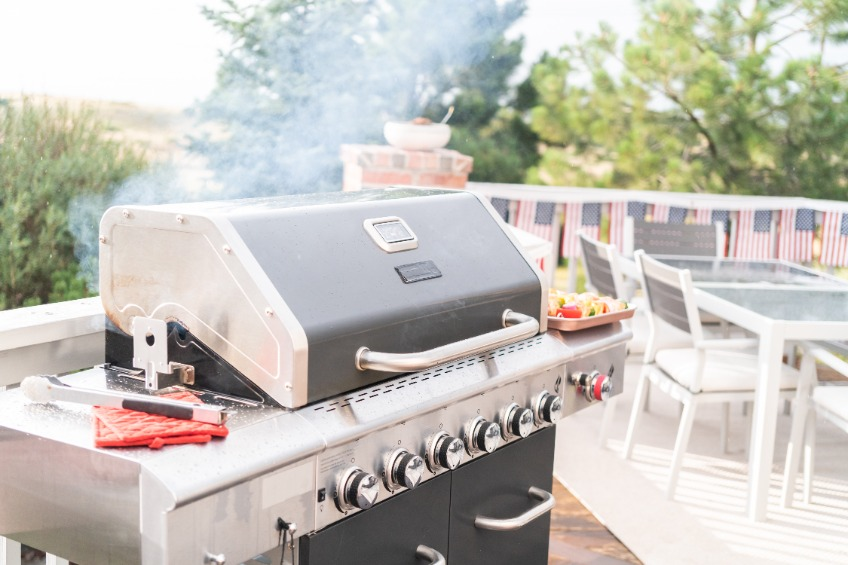

 Natural gas grills usually cost $200 to $500 more than similar propane models, and that’s before you add installation. This price gap often surprises shoppers comparing outdoor cooking options.
The difference isn’t just about the grill. Natural gas units require professional installation and permanent gas line connections, while propane grills don’t need those extras.
Natural gas grills cost more than propane grills because they use premium construction materials, need professional installation, include advanced safety features, and require specialized engineering to handle constant gas line pressure.
These factors drive up the upfront investment, though some grillers feel the convenience and lower fuel costs eventually make up for it.
Your situation determines whether the extra cost is worthwhile. Access to natural gas lines, grilling frequency, and willingness to invest in permanent infrastructure all matter.
Understanding the Price Difference
 Natural gas grills tend to cost $200-500 more than propane grills at purchase. Lower fuel expenses can offset this difference if you grill regularly.
The total cost of owning a natural gas grill goes beyond the initial price tag. Installation and monthly fuel use add up over time.
Natural Gas Grill vs. Propane Grill Cost Breakdown
Put a natural gas grill next to a propane grill, and the price difference jumps out. A basic propane grill starts around $200-400, while a comparable natural gas model begins at $400-600.
Natural gas grill ownership includes installation expenses that propane users skip. A licensed technician must connect your grill to your home’s gas line, with installation running $300-800 depending on distance.
Upfront Cost Comparison:
| Expense Category | Natural Gas | Propane |
|---|---|---|
| Grill Unit | $400-600 | $200-400 |
| Installation | $300-800 | $0 |
| Total Initial Cost | $700-1,400 | $200-400 |
Propane grills only need basic assembly, which most people handle themselves. You’ll need a propane tank—usually $50-80—and standard fittings.
Initial Investment Versus Operating Costs
Your operating costs can look different from the purchase price. Natural gas costs about half as much per BTU as propane, leading to long-term savings.
Fuel cost for natural gas runs $1.00-1.50 per therm, while propane is $2.50-3.50 per gallon equivalent. If you grill often, you might spend $50-75 a year on natural gas, compared to $100-150 on propane refills.
Lower operating costs mean you could break even within 2-3 years of frequent grilling. The more you use it, the faster you recover your investment through fuel savings.
Natural gas also spares you the hassle and cost of tank refills. Running out of fuel mid-cook or hauling heavy tanks just doesn’t happen with a fixed gas line.
Installation and Infrastructure Requirements
 Natural gas grills need permanent connections to your home’s gas supply. This requires professional installation, permits, and specialized equipment, adding $300-800 to your total costs.
Propane grills just connect to portable tanks you can buy anywhere.
Need for a Dedicated Natural Gas Line
Your home must have a gas line running to your outdoor grilling area. Most homes don’t have one in the backyard or patio, so you may need new infrastructure before using a natural gas grill.
The gas line must deliver steady pressure for proper operation. Pipe size depends on distance from your gas meter and the grill’s BTU output.
Key components of a dedicated gas line include:
- Gas line piping (black iron or flexible stainless steel)
- Pressure regulator
- Manual shutoff valve
- Outdoor-rated connection fittings
If your grill is far from the main gas line, expect higher installation costs. More distance means more materials and labor.
Professional Installation and Permitting
Most areas don’t allow homeowners to install gas lines themselves. Licensed gas fitters or plumbers must do the work for safety and code compliance.
Installers need permits before starting. These ensure the job meets safety standards and local codes. Inspection fees usually add $50-150.
The process includes assessing your gas system, running new lines, installing valves, and checking for leaks. This can take 4-8 hours, depending on complexity.
Installation costs depend on:
- Distance from gas meter
- Type of terrain (concrete, soil, landscaping)
- Local labor rates
- Permit and inspection fees
Conversion Kits and Alternatives
Some propane grills can switch to natural gas with a conversion kit. These kits swap out orifices and regulators to match natural gas flow. Kits usually cost $30-150, depending on the grill.
Even with a kit, you still need professional installation. The gas line connection requires the same licensed work and permits as a standard natural gas grill.
Not all propane grills accept conversion kits. Always check your manufacturer’s specs before buying. Some manufacturers void warranties if you alter your grill with unapproved parts.
Buying a natural gas grill from the start often makes more sense. Purpose-built models have burners and regulators designed for natural gas from the ground up.
Materials and Construction Quality
 Natural gas grills use stronger materials and better construction than many propane models. Components are built to handle constant gas line pressure and years of outdoor exposure.
Premium Materials Used in Natural Gas Grills
Natural gas grills often use 304 stainless steel for cooking grates, burners, and exterior panels. This grade resists rust and corrosion better than standard metals in propane grills.
Many models feature cast iron burners for more even heat. Gas connections and valves use brass fittings, which handle continuous gas flow without degrading. Heavy-duty aluminum is common in structural parts needing strength but not excessive weight.
Metal gauges are thicker than in propane grills. Walls, grates, and burner housings resist warping and handle higher temperatures. Since these grills stay outdoors all year, materials need to stand up to the elements.
Durability and Longevity of Components
Stainless steel burners can last 10-15 years with proper care, while many propane models manage 5-7 years. The robust build means fewer repairs.
Cast iron grates keep their shape through repeated heating and cooling. Thicker materials help the grill withstand temperature swings from winter to summer.
Natural gas burns cleaner than propane, producing fewer carbon deposits on burners and internal parts. Less buildup means fewer clogs and less maintenance over time.
Advanced Features and Technologies
 Natural gas grills often include features like multiple burners with precise temperature control, infrared heating, electronic ignition, and integrated accessories. These upgrades require extra engineering and manufacturing, which propane grills often skip.
Multiple Burners and Temperature Control
Many natural gas grills have several burners, letting you create different cooking zones at once. You can sear steaks on one side while vegetables warm on another.
Each burner has its own control valve for precise temperature. Advanced controls let you keep different areas at specific heat levels.
Common multi-burner setups:
- Three burners for basic zone cooking
- Four to six burners for advanced management
- Individual BTU controls
Building multiple burners adds complexity—each needs its own gas line and control. Precision regulators keep heat output steady for reliable results.
Infrared Burners and Rotisserie Kits
Infrared burners use ceramic tiles or stainless screens to generate intense, even heat. These can reach temperatures over 700°F, ideal for searing.
The technology behind infrared burners adds to production costs. Ceramic components and tight engineering don’t come cheap.
Rotisserie systems use motorized spits to rotate food for even cooking. Most natural gas grills offer these as built-in or optional upgrades.
Typical rotisserie parts:
- Heavy-duty electric motor
- Stainless steel spit rods
- Meat forks and counterweights
- Dedicated rear burner
Combining infrared burners with rotisserie kits gives you restaurant-style cooking at home. For those who grill often, this added capability can feel worth the extra cost.
Electronic Ignition Systems and Safety Enhancements
Electronic ignition does away with matches or manual lighters. You just press a button or turn a knob, and the burners ignite right away.
These systems rely on battery-powered or electric spark generators. Their parts have to endure outdoor weather and frequent use over the years.
Natural gas grills come with enhanced safety features that propane models sometimes skip. Automatic shut-off valves sense gas leaks or flame failures, stopping fuel flow instantly.
Built-in safety sensors keep an eye on burner performance. If a flame goes out, the system shuts off the gas to avoid dangerous buildup.
Certification and testing requirements for these safety systems increase development costs. Manufacturers must demonstrate that these features work reliably in different scenarios.
Integrated Grill Features
Natural gas grills often come with side burners for preparing sauces or sides while grilling. These extra cooking areas use the same gas line as the main burners.
Side burners usually provide 10,000 to 15,000 BTUs of power. Boiling water, sautéing vegetables, or warming food becomes convenient without leaving the grill.
Additional integrated features:
- Smoker boxes for adding wood chip flavor
- Built-in thermometers for temperature monitoring
- LED lighting systems for night grilling
- Warming racks to keep food hot
Each integrated feature adds materials and installation complexity. Every component needs its own gas connection, mounting hardware, and controls.
Combining multiple features in one grill boosts the overall value but also raises the price. You pay more upfront for versatility that standalone accessories can’t quite match.
Fuel Source Availability and Accessibility
 Natural gas requires existing utility lines, while propane uses portable tanks. This shapes where and how each fuel type is practical. Access to natural gas depends entirely on your area and the local utility network.
Regional Availability Differences
Natural gas availability depends a lot on location. Urban and suburban neighborhoods usually have gas lines installed. Rural properties often don’t have natural gas infrastructure at all.
If your home lacks natural gas service, you’ll need to check with your local utility about possible connection. Many rural areas simply aren’t near gas lines, making natural gas grills unusable regardless of budget.
Even homes with natural gas service can face challenges. Your outdoor cooking spot might be far from the nearest gas line. Running a new line to a patio or backyard means professional installation and permits.
Geographic factors affecting natural gas access:
- Urban areas: Usually have complete coverage
- Suburban areas: Generally have good availability
- Rural areas: Often have no service available
- New developments: May lack established infrastructure
Propane tanks are available almost everywhere. You can pick them up at hardware stores, gas stations, and grocery stores. For many households, propane is the only realistic option.
Portability and Convenience Factors
Propane tanks offer portability that natural gas simply can’t provide. You can move a propane grill around your yard, bring it camping, or take it to a tailgate. The 20-pound tanks disconnect and reconnect easily to any propane grill.
Natural gas grills stay fixed to your home’s gas line. You can’t relocate the grill without hiring a professional to move the connection. This setup works for built-in outdoor kitchens but removes flexibility.
Propane tanks need regular refills or exchanges. Most tanks last 18-20 hours of cooking before running out. You’ll have to keep an eye on fuel levels and make refill trips. Exchanging tanks usually costs $20-25 at retail spots.
Natural gas gives you unlimited fuel through your home’s line. There’s no risk of running out mid-cook or needing frequent refills. The continuous supply lets you grill whenever you want, with no need to check tank levels.
Efficiency, Performance, and Environmental Impact
 Natural gas grills offer better fuel efficiency and cleaner combustion than propane models. Both fuels deliver strong outdoor cooking performance. The environmental benefits of natural gas add to manufacturing costs but result in lower emissions during use.
Fuel Efficiency and Heat Distribution
Natural gas costs about half as much per BTU as propane, making it more economical for frequent grilling. You might spend $50-75 per year on natural gas, compared to $100-150 for propane with similar usage.
Propane produces roughly 2,500 BTUs per cubic foot. Natural gas generates about 1,000 BTUs per cubic foot. So, natural gas grills need larger burners and higher volume to match propane’s heat output.
Natural gas grills maintain steady pressure throughout cooking because they’re connected directly to the home’s gas line. Propane tank pressure drops as the tank empties, which can affect heat and cooking near the end of a tank. The stable pressure from natural gas means more reliable temperature control, especially during long grilling sessions.
Cleaner-Burning Fuel and Emissions
Natural gas burns cleaner than propane, producing fewer greenhouse gases per BTU. This is thanks to more complete combustion and lower carbon content in the fuel.
Key environmental advantages include:
- Lower carbon emissions per cooking session
- Reduced particulate matter production
- More complete fuel combustion
- No disposable tank waste
The cleaner-burning nature of natural gas calls for specialized burners and combustion systems. Manufacturers have to engineer components for optimal efficiency, which raises production costs. These specialized parts are designed to handle the unique properties of natural gas.
Outdoor Cooking Performance
Both natural gas and propane grills can deliver excellent results for most grilling needs. Propane’s higher BTU output means it preheats a bit faster—usually 2-3 minutes quicker than similar natural gas models.
Natural gas grills are strong at keeping steady temperatures over long cooks. You won’t run out of fuel mid-cook, which is helpful for big gatherings or when smoking foods that need hours of heat.
Heat distribution quality depends more on grill construction than on fuel type. Premium natural gas grills use cast iron burners and stainless steel parts to spread heat evenly. The unlimited fuel supply lets you cook at steady temperatures without worrying about tank levels.
Maintenance, Repairs, and Long-Term Value
 Natural gas grills need less frequent maintenance than propane models. Repairs can be more complex and expensive. Long-term value depends on how often you grill and your local natural gas prices.
Maintenance Frequency and Complexity
Natural gas grills require less routine maintenance because they burn cleaner. There’s no tank exchange or refill process, which saves time. The fuel line connects directly to your home’s supply.
Cleaning is easier with natural gas grills. The fuel leaves behind less residue and carbon on grates and burners. You’ll spend less time scrubbing between uses.
The gas line connection, though, requires professional installation. It’s important to check connection points for leaks from time to time. This adds some complexity that propane tanks don’t have.
Cost of Repairs and Component Replacement
Natural gas grills often include higher-quality components like stainless steel burners and electronic ignition. These last longer but can be costly to replace if they fail.
The permanent gas line setup means you can’t easily move the grill for repairs. Professional service may be needed for gas line issues. Propane grills are more flexible since you can disconnect the tank and move the unit if needed.
Replacement parts for natural gas grills tend to be more expensive due to specialized designs. Built-in features and advanced construction require specific parts that aren’t always compatible with propane models.
Total Cost of Ownership
Your total ownership cost covers the initial purchase price and installation fees. You’ll also need to consider fuel costs and ongoing maintenance.
Natural gas usually costs less per unit than propane. That can help balance out the higher upfront investment.
If you grill often, natural gas tends to be more economical in the long run. The savings from fuel can add up fairly quickly for frequent users.
For those who grill only occasionally, the initial expense might not be worth it. The difference in cost may not be significant if you don’t use your grill much.
The durability of natural gas grill components can extend their lifespan. Quality construction usually means you won’t need to replace parts as often.
It’s also worth considering the convenience of never running out of fuel during a cookout. That factor might influence your long-term value calculation, depending on how much you value convenience.