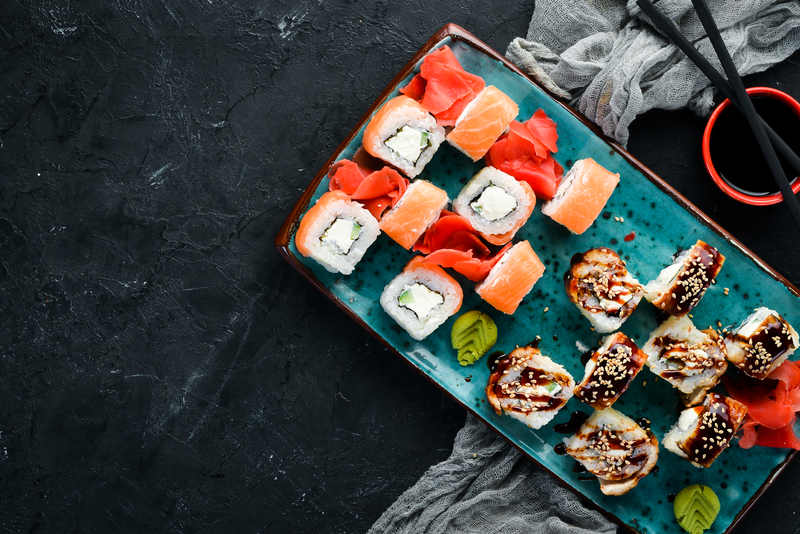


Many people think sushi is simply raw fish, but that’s not quite right.
Sushi is actually defined by its seasoned rice, which is prepared with a blend of rice vinegar, sugar, and salt, combined with various toppings like seafood, vegetables, or egg.
The rice is the essential element that makes a dish sushi, not whether the fish is raw or cooked.
Understanding what truly counts as sushi helps you appreciate the craft behind each piece.
Some sushi uses cooked ingredients like grilled eel or boiled shrimp, while other types don’t include fish at all.
The variety goes far beyond what most casual diners realize.
This guide will walk you through the proper definition of sushi and explore its different forms from traditional nigiri to modern fusion rolls.
You’ll also find an explanation of the key components that make this Japanese dish unique.
There are historical roots, techniques, and adaptations to consider as sushi has spread worldwide.
Defining Sushi: What Qualifies as Sushi?
 Sushi is defined by its foundation of vinegared rice, not by the presence of raw fish.
The rice must be seasoned with rice vinegar, sugar, and salt.
This specific preparation separates sushi from other Japanese cuisine.
The Role of Vinegared Rice
Vinegared rice forms the essential base of all sushi.
This rice, called shari or sumeshi, uses short-grain Japanese rice that becomes slightly sticky when cooked.
The rice is then seasoned while still warm with a mixture of rice vinegar, sugar, and salt.
The vinegar gives sushi rice its distinctive tangy flavor.
Without this seasoning process, you simply have plain rice, not sushi rice.
The ratio of vinegar to sugar to salt varies by chef and region, but the vinegar component remains non-negotiable.
Short-grain Japanese rice is preferred because it holds together well and has the right texture.
The grains stick to each other without becoming mushy, which allows the rice to be shaped into different forms while maintaining its structure.
What Sushi Is Not: Sashimi and Common Misconceptions
Sashimi is not sushi because it contains no rice.
Sashimi consists only of thinly sliced raw fish or meat served on its own.
While sashimi and sushi often appear together at Japanese restaurants, they are fundamentally different dishes.
Many people incorrectly assume all sushi contains raw fish.
In reality, sushi can include cooked seafood, vegetables, egg, or even meat.
The presence or absence of raw fish doesn’t determine whether something is sushi.
If a dish lacks vinegared rice, it cannot be called sushi, regardless of its other ingredients.
This is the defining rule that separates sushi from other Japanese dishes.
Key Ingredients Beyond Rice
The topping or filling on sushi is called neta.
Raw fish is the most common neta, but cooked options like shrimp, eel, and crab are equally authentic.
Vegetables, tofu, and egg also serve as traditional neta choices.
Nori (seaweed) wraps around maki rolls and temaki.
Some sushi styles don’t use seaweed at all, like nigiri, where the neta sits directly on top of the rice.
You’ll typically find three condiments served with sushi:
- Soy sauce for dipping
- Wasabi for adding heat
- Pickled ginger for cleansing your palate between pieces
These accompaniments enhance the flavor but aren’t required for a dish to qualify as sushi.
Traditional and Modern Types of Sushi

Sushi comes in several main forms, from hand-pressed nigiri to rolled maki.
Each has distinct preparation methods and ingredients.
Traditional types remain popular alongside modern creations that add new flavors and techniques.
Nigiri: Hand-Pressed Sushi
Nigiri, also called nigiri-zushi or nigirizushi, is the most recognized type of sushi.
You’ll find an oblong mound of vinegared rice topped with a slice of raw or cooked seafood.
A chef presses the rice by hand and places fish like tuna, salmon, yellowtail, or eel on top.
This style was invented around 1824 in Tokyo during the Edo period.
It started as fast food for workers and became the standard for quality sushi.
The rice portion is smaller now than it was originally, and chefs use less vinegar than in the past.
When you eat nigiri, you can dip the fish side lightly in soy sauce.
The fish and rice should stay together in one bite.
Common toppings include shrimp, squid, and imitation crab meat.
Maki: Rolled Sushi
Maki, or maki-zushi, refers to sushi rolls wrapped in nori seaweed.
The chef places rice and fillings on a sheet of nori, then rolls everything using a bamboo mat.
You’ll see maki cut into six to eight pieces.
Hosomaki are thin rolls with one filling, like cucumber roll or tuna roll.
The nori stays on the outside, and these rolls are about one inch wide.
Futomaki are thick rolls that contain multiple ingredients.
These wider rolls include vegetables, egg, and seafood combinations.
You’ll often find futomaki at celebrations and special events.
Maki sushi gives you many vegetarian sushi options.
Cucumber, avocado, pickled radish, and other vegetables make filling choices without seafood.
Uramaki and American-Inspired Rolls
Uramaki, or inside-out rolls, flip the traditional structure by putting rice on the outside and nori on the inside.
This style became popular in America when customers wanted less visible seaweed.
The California roll is the most famous uramaki.
It contains imitation crab, avocado, and cucumber with rice on the outside.
Often you’ll see sesame seeds or fish roe coating the rice.
Other American-inspired options include:
- Spicy tuna roll with raw tuna and spicy mayo
- Shrimp tempura roll with fried shrimp and vegetables
- Sushi burrito that wraps ingredients in a large format
These modern sushi styles add cream cheese, fried ingredients, and spicy sauces.
They differ from traditional Japanese recipes but have created new sushi fans worldwide.
Temaki, Chirashi, and Regional Variations
Temaki sushi is a hand roll shaped like a cone.
The nori wraps around rice and fillings, and you eat it with your hands.
Temaki works well for casual meals since it doesn’t require cutting.
Chirashi, or chirashizushi, serves rice in a bowl with raw fish and vegetables scattered on top.
This style is fast to make and filling.
You’ll find different versions across Japan, with some using cooked ingredients mixed into the rice.
Oshizushi, or pressed sushi, uses a wooden mold to compress layers of rice and fish into a rectangle.
This Osaka specialty gets cut into bite-sized pieces.
Inari sushi features a pouch of fried tofu filled with sushi rice.
The sweet tofu creates a different texture from other sushi styles.
In some regions, the pouches have pointed corners that look like fox ears.
The Fundamental Components of Sushi

Sushi relies on three essential elements that work together to create its distinctive character.
The seasoned rice forms the base, the toppings provide variety and protein, and the condiments add flavor contrast.
Rice: The Heart of Sushi
Sushi rice, called shari, is what actually makes sushi sushi.
Without this seasoned rice, you’re eating something else entirely, even if raw fish is involved.
The rice used is short-grain rice, which has a sticky texture that helps it hold together.
After cooking, the rice is seasoned with a mixture of rice vinegar, sugar, and salt.
This creates a balance of tangy and slightly sweet flavors.
The rice should be warm when served, not cold.
It needs to be firm enough to keep its shape but soft enough to break apart gently in your mouth.
Sushi chefs spend years learning to prepare rice correctly because it’s considered more important than the toppings themselves.
Seafood and Toppings (Neta)
Neta refers to everything that sits on top of or gets wrapped in the rice.
Raw seafood is common, but cooked and cured options appear just as often in authentic sushi.
Raw options include:
- Tuna in different cuts
- Fresh fish like salmon and sea bream
- Uni (sea urchin)
- Raw seafood such as scallops
Cooked and prepared options include:
- Ebi (boiled shrimp)
- Tamago (sweet egg omelet)
- Unagi (grilled eel)
- Anago (simmered sea eel)
- Saba (cured mackerel)
- Crab stick
Each topping is selected based on its season, freshness, and how it pairs with the rice.
Some items are marinated, aged, or treated to enhance their natural flavors.
Condiments and Accompaniments
Three main condiments complement sushi: wasabi, soy sauce, and gari (pickled ginger).
Each serves a specific purpose.
Wasabi adds aromatic heat and helps balance the richness of fatty fish.
In traditional sushi, the chef places the right amount between the rice and topping, so you don’t need to add more.
Soy sauce provides umami depth.
You should dip the fish side lightly, not the rice, to avoid breaking the piece apart or oversaturating it.
Gari, the pickled ginger, cleanses your palate between different pieces.
You eat it separately, not as a topping.
Nori (seaweed) and takuan (pickled radish) also appear in certain sushi styles, particularly in rolls.
Origins of Sushi and Its Evolution

Sushi began as a fish preservation method in Southeast Asia over a thousand years ago, then traveled to Japan where it transformed from fermented food to fresh fast food during the Edo period.
The rice you eat with sushi today was originally meant to be thrown away.
Southeast Asian Fermentation Roots
The earliest form of sushi started in Southeast Asia, likely in the Mekong River basin covering modern-day Laos, Cambodia, and Thailand.
This preservation method called narezushi involved packing fish with salt and rice to create fermentation.
The technique spread to China by the 4th century, where Han Chinese adopted it from the Baiyue people of southern China.
You would have seen this dish referenced in Chinese records from the 2nd century CE using the character “sa,” meaning pickled fish with salt and rice.
The rice in narezushi served only as a fermentation agent.
After months of fermenting, people ate the preserved fish and discarded the rice completely.
This method kept fish edible for long periods without refrigeration, solving a major food storage problem in hot climates.
Transformation in Japan: Narezushi to Nigiri
Narezushi made its way into Japan during the Yayoi period, arriving alongside wet-field rice cultivation.
By the Muromachi period (1336-1573), Japanese cooks developed namanare, a partially fermented style where, for the first time, people ate both the fish and the rice together.
The Edo period (1603-1867) saw the rise of haya-zushi, or “fast sushi,” which dropped fermentation altogether.
Instead of waiting days for natural fermentation, cooks mixed rice with vinegar, making sushi that was ready to eat right away.
Nakano Matazaemon introduced red vinegar (aka-su) from sake lees during this era, giving sushi its distinctive tangy flavor.
This vinegar-based method led to several familiar types: chirashizushi (scattered sushi), inarizushi (stuffed tofu pouches), and makizushi (rolled sushi).
Hanaya Yohei and the Edo Period
Hanaya Yohei is credited with inventing or perfecting nigiri-zushi around 1824 at his shop in Ryogoku, Edo (now Tokyo).
His version featured hand-pressed vinegared rice topped with a slice of fresh fish.
The nigiri from this time was quite different in size—about three times larger than what you see today.
Yohei used less vinegar and more salt than current recipes, and the red vinegar gave the rice a noticeably darker hue.
Nigiri soon became a fast food for the chonin, or merchant class, in Edo.
You could grab a piece from a street stall, eat it with your hands, and move on with your day.
Sushi Preparation and Culinary Craft

Making sushi calls for specific skills, quality ingredients, and a good deal of attention to detail.
The process covers careful rice preparation, precise knife techniques, and a real understanding of seafood handling.
Techniques and the Role of the Sushi Chef
Becoming a sushi chef, or itamae, is no quick journey. Most traditional chefs train for at least five years before they’re trusted to work independently.
The first major skill an itamae learns is rice preparation. Proper sushi-meshi means cooking rice to the right texture, seasoning it with a vinegar mixture at just the right temperature, and keeping it warm throughout service.
The rice needs to hold its shape without turning sticky or mushy.
Knife work is just as crucial. Sushi chefs use specialized knives, slicing fish at angles that affect both texture and mouthfeel.
Different fish demand different cutting techniques, and these subtle differences really matter.
Core skills include:
- Rice cooking and seasoning
- Fish aging and curing methods
- Knife sharpening and cutting angles
- Temperature control during service
- Guest pacing and interaction
Traditional sushi chefs also learn to cure mackerel in vinegar, age tuna for enhanced umami, and prepare cooked items like tamago.
Each method is aimed at building flavor and texture in specific ways.
Ingredient Quality, Seasonality, and Authenticity
Authentic sushi relies on fresh, seasonal ingredients.
At traditional restaurants, you won’t find all fish year-round, since chefs follow the natural seasons.
Real sushi uses fish when they’re at their best. Spring might bring sweet shrimp and young sea bream.
Summer features bonito and horse mackerel. Fall is for fatty tuna and salmon, while winter brings yellowtail and oysters.
Quality standards are strict—fish must be handled properly from catch to serving, and storage temperatures are closely monitored.
Daily inspections are typical, and anything subpar gets rejected without hesitation.
Minimal processing is another hallmark of authentic sushi. The chef aims to enhance natural flavors, not mask them with heavy sauces or too many garnishes.
Sushi Art and Modern Presentation
Sushi art is about balancing visual appeal with taste. Traditional presentations are clean and simple, letting the ingredients speak for themselves.
Each piece is meant to look balanced, with the rice matching the topping in size and colors that complement each other.
Plating often follows a logical sequence, starting with lighter flavors and moving toward richer ones.
Modern sushi recipes have pushed the boundaries visually, using edible flowers, gold leaf, or creative plating.
Still, these additions shouldn’t upset the basic balance of rice and topping.
Authentic sushi maintains restraint, even in creative presentations.
Fundamental principles—temperature, texture, and flavor harmony—remain the focus, making each piece inviting without needless complexity.
Globalization and Contemporary Interpretations
 Sushi has gone global, spawning countless regional twists and new formats.
Modern sushi culture now includes everything from conveyor belt restaurants to sustainability questions that shape how we eat it today.
Sushi Worldwide and Regional Adaptations
Sushi outside Japan often looks nothing like the traditional versions.
Once it reached other countries, chefs adapted recipes to fit local tastes and available ingredients.
In the United States, the California roll became a major adaptation in the 1960s.
This inside-out roll uses avocado, cucumber, and imitation crab instead of raw fish.
American sushi restaurants often add cream cheese, fried ingredients, and sweet sauces that are rare in Japan.
Regional variations include:
- Hawaii: Spam musubi with grilled Spam, rice, and nori
- Brazil: Hot rolls wrapped in rice paper and fried
- Norway: Sushi with local salmon and Nordic ingredients
- Korea: Gimbap using sesame oil and cooked vegetables
These adaptations make sushi more approachable for those unfamiliar with raw fish.
Some Japanese chefs see these changes as departures from tradition, while others view them as cultural exchange at work.
Conveyor Belt Sushi and Sushi Bars
Kaiten-zushi, or conveyor belt sushi, changed casual dining in Japan starting in the 1950s.
This format made sushi affordable and easy for everyday meals.
Customers sit at a counter and pick plates of sushi as they pass by on a moving belt.
Each plate’s color or pattern signals its price. Many modern places use tablets for ordering, and some deliver food directly to your seat.
Sushi bars offer a different atmosphere. You sit across from the chef, who prepares your order right in front of you.
This setup allows for interaction and special requests. Sushi restaurants now range from budget chains to high-end omakase experiences where the chef chooses each piece for you.
Trends, Sustainability, and the Future of Sushi
Overfishing threatens the fish species used in sushi today. Bluefin tuna populations have dropped dramatically due to high demand from sushi restaurants worldwide.
Several species face similar risks. It’s not just about tuna—other fish are feeling the pressure too.
The sushi industry is responding with sustainable alternatives. Many restaurants now use farmed fish, plant-based substitutes, or less threatened species.
You might see labels indicating sustainable sourcing or certifications from marine conservation groups. Sometimes, it’s hard to know what those labels really mean, but at least the effort is there.
Current trends include:
- Vegan and vegetarian sushi using tofu, mushrooms, and vegetables
- Lab-grown fish alternatives
- Focus on lesser-known fish species to reduce pressure on popular varieties
- Zero-waste practices in sushi restaurants
Technology also shapes modern sushi. Sushi vending machines, delivery apps, and grocery store sushi have made it available almost anywhere.
These changes help sushi reach more people. Of course, that does raise questions about quality and tradition—how much can you really preserve when sushi comes out of a vending machine?