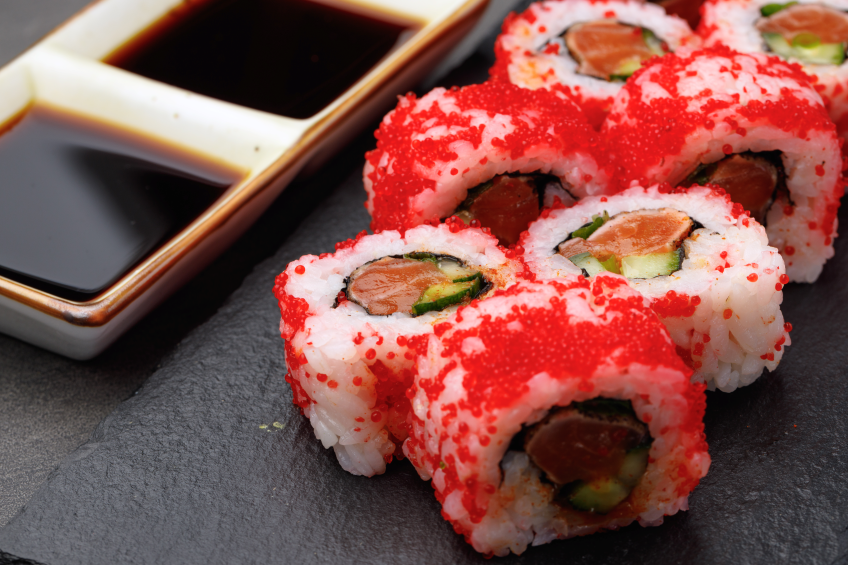

 If you’ve ever glanced at your sushi and wondered about those tiny red balls on top, you’re certainly not alone.
The red balls on sushi are called tobiko, the eggs of flying fish that add a crunchy texture and slightly salty flavor to your meal.
These bright eggs are among the most popular types of fish roe in Japanese cuisine.
Tobiko is just one kind of fish egg you might spot on your sushi.
Other options include masago, ikura, and several specialty varieties. Each type brings its own taste and texture. Some are larger and softer, while others are tiny and crunchy.
What Are the Red Balls on Sushi?
 The red balls on sushi are fish roe, fish eggs used as a topping to add color, texture, and flavor.
Tobiko is the most common type, delivering that distinctive crunchy, salty bite on top of your rolls.
Overview of Red Sushi Roe
Red balls on sushi are a type of fish roe from various fish species. These tiny eggs serve as both decoration and a flavor enhancer for your sushi.
The eggs usually measure less than one millimeter in diameter. Fish roe for sushi is cured with salt, which preserves the eggs and brings out their natural flavors.
The roe adds a pop of texture when you bite into it. You’ll find these red balls on top of sushi rolls, scattered around the plate, or pressed onto the outside of rice.
They’re real fish eggs, not artificial substitutes. The vibrant color makes your sushi visually appealing, and the taste adds a layer of complexity to each bite.
Common Types of Red Roe on Sushi
Tobiko is the most popular red roe you’ll encounter. It comes from flying fish and features small, crunchy eggs with a red-orange color.
Tobiko has a mildly salty and slightly smoky taste. Masago is from capelin fish and appears smaller and paler than tobiko.
Masago eggs have a yellowish-orange hue and are often dyed to look brighter red. Masago costs less than tobiko and has a softer texture with a subtle, slightly bitter flavor.
Ikura consists of large salmon eggs that are bright orange or red. Unlike the tiny, crunchy tobiko, ikura eggs are much bigger and burst in your mouth with a rich, salty-sweet flavor.
Each ikura egg measures several millimeters across and has a soft, juicy texture.
Visual and Flavor Appeal
The red balls on sushi create an immediate visual impact on your plate. The bright red and orange colors contrast with the white rice, dark nori seaweed, and pale fish.
This color combination makes the dish more appetizing and signals freshness. These fish eggs deliver a burst of briny, oceanic flavor.
The saltiness balances out the mild taste of rice and complements the richness of raw fish. When you bite down, the eggs pop or crunch, adding some textural variety to the smooth rice and soft fish.
Sushi roe also offers nutritional benefits. The eggs contain omega-3 fatty acids, protein, vitamin D, and vitamin B12.
They’re more than just a garnish—they actually contribute to the nutritional profile of your meal.
Tobiko: The Classic Red Sushi Garnish
 Tobiko is flying fish roe that appears as small, colorful balls on top of sushi rolls and sashimi.
The red variety gets its vibrant color from natural ingredients like chilies or beets, making it one of the most recognizable garnishes in Japanese cuisine.
What Is Tobiko?
Tobiko is the Japanese term for flying fish roe, which comes from the eggs of female flying fish. These fish are named for their ability to leap above the ocean’s surface.
The most common species used for tobiko is Cheilopogon agoo, a Japanese flying fish. Each egg measures about 0.5 to 0.8 millimeters in diameter, making them small but noticeable on sushi.
What is tobiko made of? The eggs are harvested from flying fish and then processed with salt. Red tobiko gets its bright color from natural ingredients like chilies or beets.
Chile-infused red tobiko has a spicier taste than versions made with beets. The eggs go through a harvesting and preservation process that gives them their distinctive characteristics.
This process adds a smoky and slightly fishy flavor, somewhat similar to seaweed.
Tobiko Taste and Texture
Tobiko delivers a salty and mildly sweet taste with a distinct umami flavor. The eggs have a crunchy texture that sets them apart from softer sushi ingredients.
When you bite into tobiko, you get a satisfying pop and crunch. This texture comes from the natural structure of the fish eggs.
Red tobiko made with chilies adds a spicy kick to your sushi. The beet version offers the same visual appeal without the heat.
Both types keep the briny saltiness that pairs well with fish and rice. The flavor is smoky and oceanic without being overpowering.
Even a small amount adds noticeable taste to your sushi roll.
Tobiko in Sushi and Sashimi
Tobiko appears most often as a garnish on nigiri and maki rolls. You’ll see it sprinkled on top of California rolls, spicy tuna rolls, and other popular varieties.
The red color makes your sushi visually appealing. Tobiko does more than look good—it adds flavor and texture that enhance your eating experience.
Tobiko gunkan maki features rice wrapped in nori and shaped like a boat, with a generous portion of tobiko on top. This presentation makes the flying fish roe the star of the dish.
You can also find tobiko on sashimi plates and raw oysters. Some restaurants serve it mixed into salads or as a topping for seafood dishes.
The crunchy eggs provide contrast to the soft texture of raw fish and sticky rice.
Masago and Other Red Sushi Roe Varieties
 While tobiko is popular, several other fish roe varieties appear as red or orange balls on sushi. Masago serves as a budget-friendly alternative with a softer texture, while larger roe types like ikura, kazunoko, and tarako offer distinct flavors and appearances.
Masago: Capelin Roe
Masago comes from capelin, a small fish found in cold waters of the North Atlantic, North Pacific, and Arctic oceans. The eggs are naturally pale yellow but get dyed orange or red to make them more visually appealing on sushi.
You’ll notice masago has a milder, slightly salty taste compared to other fish eggs. The texture is softer and less crunchy than tobiko, which makes it easy to spread on rolls or mix into sauces.
Restaurants often use masago on California rolls, spicy crab rolls, and as a garnish for nigiri. It adds color and a subtle seafood flavor without overwhelming other ingredients.
The small size of capelin roe makes it practical for coating the outside of rolls completely.
Difference Between Tobiko and Masago
The main difference between tobiko and masago comes down to the source fish and resulting texture. Tobiko comes from flying fish, while masago comes from capelin.
| Feature | Tobiko | Masago |
|---|---|---|
| Size | Slightly larger | Smaller |
| Texture | Crunchier | Softer |
| Color | Naturally bright orange | Dyed orange or red |
| Cost | More expensive | More affordable |
Tobiko has a firmer pop when you bite into it. Masago feels smoother on your tongue.
Both types of roe work well as sushi toppings, but chefs choose based on texture preference and cost considerations.
Other Red Sushi Roe: Ikura, Kazunoko, Tarako
Ikura refers to salmon roe, which appears as large, translucent orange-red spheres. Each egg is much bigger than tobiko or masago and bursts with a rich, slightly sweet flavor.
You’ll find ikura served as nigiri or in rice bowls. Kazunoko is herring roe that comes in a solid cluster rather than individual eggs.
It has a firm, crunchy texture and golden-yellow color. This roe is considered a delicacy in Japanese cuisine.
Tarako consists of salted pollock roe, typically appearing pink or red. It comes in a sac form and has a spicy, salty taste.
Restaurants serve tarako in pasta dishes or as a topping for rice.
Colorful Varieties and Types of Tobiko
 Tobiko naturally appears in a red-orange shade, but you’ll find it in several vibrant colors at sushi restaurants. These different colored tobiko varieties are created using natural ingredients that also add unique flavors to the fish eggs.
Colored Tobiko: Red, Black, Green, and More
Red tobiko is the most common type you’ll see on sushi. It gets its bright red color from beet extract, which enhances the natural red-orange shade of the flying fish eggs.
This variety keeps the traditional salty and smoky taste of tobiko without adding new flavors. Black tobiko stands out with its dark appearance, created by adding squid ink during processing.
The squid ink completely transforms the natural color and makes the salty flavor stronger. You’ll often find this type used in black sushi rolls.
Green tobiko gets its color and spicy kick from wasabi, the Japanese horseradish paste. Yellow tobiko uses yuzu citrus, an East Asian fruit that gives the eggs a bright yellow color and a tart, citrusy taste.
These colored varieties let you add both visual appeal and different flavor profiles to your sushi dishes.
Wasabi Tobiko and Flavored Varieties
Wasabi tobiko offers more than just green color. The wasabi infusion adds a sharp, spicy heat that complements the natural brininess of the fish eggs.
This variety works well when you want to add extra kick to your sushi roll without applying wasabi paste separately. Yuzu tobiko provides a citrus contrast to the salty fish flavor.
The yuzu fruit brings a tart and slightly sweet taste that’s different from regular lemon or lime. Some restaurants also offer specialty flavored tobiko varieties, though red, black, green, and yellow remain the standard options you’ll find most often.
Natural vs. Dyed Tobiko
Natural tobiko has a red-orange color straight from the flying fish. This is the original appearance before any processing or dyeing happens.
The natural version offers the pure taste of flying fish roe with its salty, smoky, and slightly sweet flavor. Dyed tobiko goes through additional processing with natural ingredients like beet extract, squid ink, wasabi, or yuzu.
These additions change both the color and taste of the eggs. Despite the dyeing process, quality tobiko uses only natural ingredients rather than artificial food coloring.
The dying process doesn’t reduce the nutritional value or quality of the fish eggs.
Nutritional Benefits and Safety of Sushi Roe
 Sushi roe offers nutrients that support health, such as omega-3 fatty acids, vitamins, and minerals. Knowing both the nutritional value and safety considerations can help you make better choices when eating sushi.
Omega-3 Fatty Acids and Health Benefits
Fish roe contains high levels of omega-3 fatty acids, which your body can’t make on its own. These fats help reduce inflammation and support heart health by improving blood flow and lowering blood pressure.
The omega-3s in roe also support brain function. Some research suggests they may help improve memory and focus.
Roe contains astaxanthin, a strong antioxidant that gives some roe its red or orange color. This compound helps protect cells from damage and may support eye and skin health.
Common Vitamins and Minerals in Roe
Sushi roe is a good source of protein, providing amino acids your body uses for muscle growth and repair. A single serving can offer several grams of high-quality protein.
You’ll also find important vitamins in fish roe, including:
- Vitamin B12: Supports nerve function and red blood cell formation
- Vitamin D: Helps your body absorb calcium and supports bone health
- Vitamin E: Acts as an antioxidant to protect your cells
Fish roe contains minerals like selenium, which supports the immune system. Phosphorus helps build strong bones and teeth, and iron helps carry oxygen in your blood.
Is Sushi Roe Safe to Eat?
Sushi roe is generally safe when sourced from reputable suppliers and handled correctly. Most sushi restaurants use roe that’s been checked for quality and stored properly to prevent bacterial growth.
If you have a fish or shellfish allergy, you should avoid roe, as it can trigger reactions. Pregnant women should consult a doctor before eating raw roe, due to potential mercury and food safety concerns.
Fresh roe should smell clean, like the ocean, without strong fishy odors. It should look bright and have firm, intact eggs. If it smells off or looks mushy, it’s best not to eat it.
How Sushi Roe Is Used and Served
 Fish eggs show up in Japanese cuisine in many ways, from colorful garnishes on sushi rolls to featured ingredients in rice bowls and seafood dishes. Chefs use roe to add flavor, texture, and visual appeal to both traditional and modern recipes.
Sushi Garnishes and Presentation
Sushi roe serves as both a garnish and a main sushi ingredient. When you order sushi, you’ll often see tobiko or masago sprinkled on top of rolls for a crunchy texture and bright color.
Roe also appears as nigiri, where a cluster of fish eggs sits on a small mound of rice, held together by a strip of nori. This style lets the roe stand out as the main feature. Ikura, with its large, juicy pearls, is often served this way.
Chefs use different colored roe to create visual patterns on specialty rolls. The small spheres catch the light and add dimension to the plate.
Beyond sushi, roe works as a garnish for sashimi platters and rice bowls.
Popular Sushi Rolls Featuring Roe
You’ll find roe on many popular sushi rolls at Japanese restaurants. California rolls often get topped with orange tobiko or masago for extra texture and a mild, slightly sweet taste.
Rainbow rolls feature several types of fish on top, often finished with a sprinkle of colorful roe. Spicy tuna and spicy salmon rolls commonly include tobiko mixed into the filling or placed on top, adding a pleasant crunch against the creamy spicy mayo.
Dragon rolls and caterpillar rolls use roe as decorative accents, along with other toppings. Some specialty rolls wrap the outside in a layer of tobiko or masago, creating a textured coating.
Other Japanese Dishes with Roe
Japanese cuisine uses fish eggs beyond sushi in many traditional dishes. Mentaiko, or marinated pollock roe, appears in pasta, rice bowls, and even as a filling for onigiri rice balls.
It’s sometimes spread on toast or mixed with butter. Uni, or sea urchin roe, is served fresh over rice or as a topping for noodle dishes.
Rice bowls called donburi often feature ikura as a main topping, sometimes with salmon or other seafood. The salmon eggs add a burst of salty, ocean flavor.
Roe appears in soups and can add depth to dashi broth. Some restaurants serve it as a side with soy sauce and wasabi. You might also find roe in Japanese omelets or as a filling for hand rolls.
Authenticity, Alternatives, and Misconceptions
 The red balls on your sushi might not be what you think. Understanding the differences between premium fish roe, common substitutes, and misleading products helps you know what you’re actually eating.
Tobiko vs. Caviar
Caviar and tobiko serve different culinary purposes, even though both are fish eggs. True caviar comes from sturgeon and is much more expensive than tobiko.
Caviar has larger eggs, a buttery texture, and colors that range from dark gray to golden. Tobiko comes from flying fish and is much smaller, about 1 to 2 millimeters in diameter.
The texture of tobiko is crunchy and firm, while caviar feels smooth and creamy. Caviar has a rich, almost nutty flavor, while tobiko tastes lighter and more briny, with a bit of sweetness.
The price difference is significant. Caviar can cost hundreds of dollars per ounce, while tobiko is affordable at most sushi restaurants.
Common Misconceptions About Roe
Many people think all sushi roe is the same, but there are different types. Sujiko is salmon roe still in the egg sac, while ikura is the separated salmon eggs. These aren’t the same as the small red balls on California rolls.
Another common mistake is assuming the bright red or orange color is always natural. Fresh flying fish roe is actually pale golden or light yellow. Most tobiko is colored with natural or synthetic dyes for that vibrant look.
The term “masago” doesn’t refer to a specific fish species. It means “fine sand” in Japanese and describes any broken-up or small fish roe grains.
Substitutes and Food Adulteration
Food fraud is surprisingly common with sushi roe products. The red balls sold as tobiko are often actually capelin roe (masago), which is cheaper.
Capelin eggs are smaller and tend to be chewier than flying fish roe. Some suppliers mix tobiko with herring roe to cut costs, yet still market it at premium prices.
At conveyor belt sushi restaurants, it’s rare to find genuine tobiko. These places usually serve capelin roe or a blend instead.
When buying roe for home use, it’s wise to check labels closely. Many packages claim to be “flying fish roe” but contain mostly capelin with added coloring.
True tobiko has a pale golden color, not the vivid red or orange you might expect.