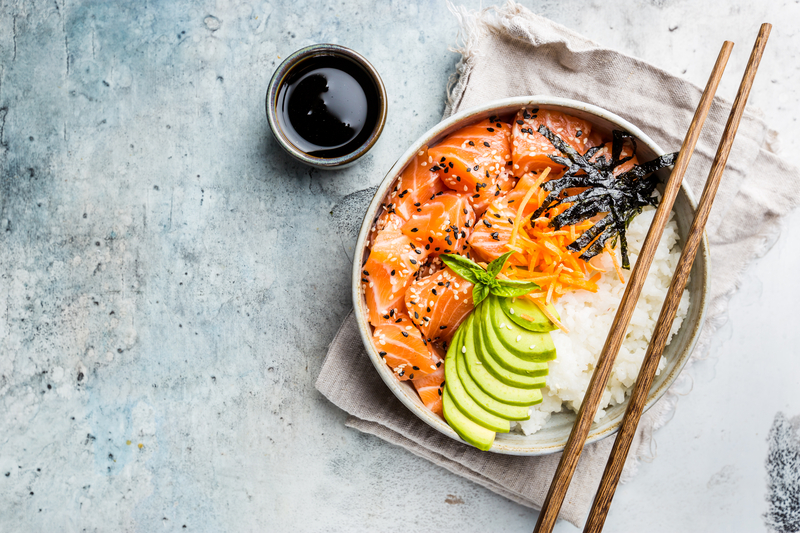


Poke bowls have become a global food trend, showing up in restaurants from New York to Tokyo. You might assume this raw fish dish comes from Japan because of its similarity to sashimi.
However, poke bowls are Hawaiian in origin, though they have been significantly shaped by Japanese culinary influences over time.
The confusion about poke’s origins makes sense when you look at the dish’s history. Ancient Hawaiians created poke as a simple preparation of raw fish with sea salt and seaweed.
When Japanese immigrants arrived in Hawaii in the late 1800s, they brought ingredients like soy sauce and sesame oil that transformed the dish into what you recognize today.
The story involves centuries of tradition, immigration patterns, and the mixing of Pacific Island and Asian cooking styles. This article will walk you through how a humble fisherman’s snack became an international sensation.
Understanding Poke Bowl: Definition and Core Ingredients
 A poke bowl combines raw fish, rice, and toppings into a complete meal that balances freshness with simple preparation.
The dish relies on quality ingredients and proper seasoning to create its signature taste.
What Is a Poke Bowl?
A poke bowl is a dish made with raw fish served over rice and topped with various ingredients. The word “poke” means “to slice or cut crosswise into pieces” in Hawaiian, which describes how you prepare the fish.
You’ll find two main styles of poke bowls today. The traditional Hawaiian version uses simple marinades like soy sauce and sesame oil with minimal toppings.
The modern version offers more customization with multiple sauces, vegetables, and add-ons. The dish started as a simple fisherman’s snack in Hawaii.
It didn’t include rice originally. That came later when Japanese immigrants introduced the concept of serving seasoned fish over rice, similar to their rice bowl dishes.
Common Components of a Poke Bowl
Your poke bowl typically includes several key layers:
Base: White or brown rice forms the foundation. Some places offer alternatives like mixed greens or cauliflower rice.
Protein: Raw fish is the main component. Ahi tuna is most common, but you’ll also find salmon, yellowtail, or octopus.
Marinade: Traditional poke uses soy sauce (shoyu) and sesame oil. These ingredients give the fish its savory, umami flavor.
Toppings: Classic options include green onions, sweet onions, and seaweed. Modern versions add avocado, cucumber, edamame, or pickled vegetables.
Garnishes: Sesame seeds, crispy onions, or nori strips add texture and flavor.
The Importance of Raw Fish in Poke Bowls
Raw fish makes poke bowls what they are. You need very fresh, high-quality fish because you eat it uncooked.
The fish must be sushi-grade, which means it’s been frozen to specific temperatures to eliminate parasites.
Ahi tuna became the standard choice because of its firm texture and mild flavor. It holds up well when cut into cubes and mixed with marinades.
Salmon offers a richer, fattier taste that many people enjoy. The quality of your raw fish directly affects the entire bowl.
Fresh fish tastes clean and slightly sweet. It should never smell overly fishy or have a slimy texture.
Proper handling and storage keep the fish safe to eat raw.
Hawaiian Origins of Poke

Poke began in ancient Hawaii as a simple preparation method used by native fishermen.
The word “poke” means “to slice or cut crosswise into pieces” in the Hawaiian language, describing how locals prepared their fresh catch with basic island ingredients.
Poke in Ancient Hawaii
Ancient Hawaiians created poke out of necessity and abundance. Native fishermen would cut their fresh catch into small chunks immediately after returning to shore.
This wasn’t a complex dish but a practical way to eat quickly between fishing trips. The original preparation was straightforward and relied entirely on what the ocean and land provided.
Fishermen used reef fish like skipjack tuna, known locally as aku, because these were the most common catches.
They ate the fish raw to preserve energy and time, seasoning it only with ingredients they could gather from their immediate surroundings.
Traditional Ingredients and Preparation
Traditional Hawaiian poke used only a handful of local ingredients. The main seasonings were pa’akai (sea salt), limu (seaweed), and inamona (roasted and crushed kukui nuts).
Each ingredient served a specific purpose in the dish. Sea salt preserved the fish and added basic flavor.
Limu provided texture and a taste of the ocean. Inamona gave the dish a rich, oily, savory quality that made the simple preparation more satisfying.
The preparation never included soy sauce, sesame oil, or rice. These came much later through Japanese influence.
Original poke was served on its own as a snack, not as a meal over rice. The fish remained the center of attention with minimal additions.
Role of Fish and Local Culture
Fish played a central role in Hawaiian culture and daily life. The ocean provided the main protein source for island communities.
Poke represented the Hawaiian approach to food: fresh, simple, and tied directly to the environment. Hawaiian fishermen understood which fish worked best for raw preparation.
They selected fish based on what they caught that day, making poke a dish that changed with the seasons and ocean conditions.
This connection between the catch and the meal defined traditional Hawaiian cuisine. The practice of eating raw fish wasn’t unique to Hawaii, but the specific method of cutting and seasoning with kukui nuts and local seaweed made Hawaiian poke distinct.
This tradition continued for centuries before outside influences transformed it into the dish you recognize today.
Japanese Influence on Modern Poke Bowls

Japanese immigrants brought soy sauce, sesame oil, and rice to Hawaii starting in the late 1800s, which changed poke from a simple fisherman’s snack into the bowl you recognize today.
These additions created the modern marination style that defines poke bowls.
Arrival of Japanese Immigrants
Japanese workers came to Hawaii in large numbers during the late 19th and early 20th centuries to work on sugar plantations. They brought their food traditions with them.
These immigrants introduced ingredients that were completely new to Hawaiian cuisine. Soy sauce became one of the most important additions to poke.
Rice, which was a staple in Japanese meals, eventually became the base for poke bowls instead of eating the fish alone.
The Japanese population in Hawaii grew significantly through the 1900s. Their cooking methods and ingredients mixed with Native Hawaiian traditions.
This created a new version of poke that combined both cultures.
Fusion of Flavors and Techniques
Japanese ingredients transformed how Hawaiians prepared and served poke. Sesame oil added a rich, nutty flavor that complemented the raw fish.
Shoyu (Japanese soy sauce) replaced or enhanced the traditional sea salt. You can find several Japanese ingredients in modern poke bowls:
- Furikake – a seaweed and sesame seed seasoning sprinkled on top
- Wasabi – adds heat and cuts through the richness of fatty fish
- Pickled vegetables – like pickled ginger or cucumber for contrast
- Ponzu – a citrus-based sauce that offers a tangy alternative to shoyu
These ingredients didn’t replace Hawaiian traditions. Instead, they added new options and flavors.
The Japanese emphasis on fresh, high-quality fish matched perfectly with Hawaiian fishing culture.
Evolution of Marination and Sauces
Early Hawaiian poke used minimal seasoning with sea salt and seaweed. Japanese influence changed this approach completely.
Soy sauce-based marinades became the standard way to prepare poke. You’ll find that most poke today soaks in shoyu mixed with sesame oil, green onions, and chili peppers.
Some versions use ponzu for a lighter, more acidic profile. The marination time also reflects Japanese techniques.
Traditional sashimi preparation taught Hawaiians how to handle raw fish more carefully. Modern poke balances the marination so the fish absorbs flavor without getting mushy or overly salty.
Japanese presentation styles influenced how poke bowls look today. The careful arrangement of ingredients and attention to color come from Japanese food aesthetics.
The Transformation: From Hawaiian Poke to Contemporary Poke Bowls
 The modern poke bowl emerged through several key changes: adding rice as a base, expanding protein choices beyond traditional fish, and creating customizable meal formats that let you build your own bowl.
Introduction of Rice and the Bowl Format
Traditional Hawaiian poke was never served over rice. Fishermen ate it as a quick snack on its own, seasoned only with sea salt and seaweed.
Japanese immigrants changed this in the late 1800s and early 1900s. They brought the donburi concept, which meant serving food over rice in a bowl.
This turned poke from a simple snack into a full meal. The bowl format became standard in the 1970s across Hawaii.
Local delis and lunch counters started offering pre-marinated fish over rice with basic toppings. This version stayed simple and focused on the fish quality.
The modern poke bowl you see today took this further. It added layers of vegetables, multiple sauces, and various toppings.
The bowl became bigger and more filling than the original Hawaiian style.
Popular Protein Options: Tuna, Salmon, and More
Early Hawaiian poke used reef fish like skipjack tuna. The Japanese fishing industry made ahi tuna (yellowfin tuna) the most common choice.
This fish has a firm texture and mild flavor that works well with soy-based marinades.
Common Poke Proteins:
- Ahi tuna – The classic choice for tuna poke bowls
- Yellowfin tuna – Another name for ahi, prized for its quality
- Albacore tuna – A lighter, milder option
- Salmon – Not traditional but extremely popular in salmon poke bowls
Salmon poke became popular on the mainland United States. It was not used in traditional Hawaiian poke.
The salmon poke bowl appeals to people who prefer a richer, fattier fish. Many poke shops now offer both tuna poke and salmon poke as their main options.
Rise of Customizable Bowls
The poke trend took off around 2010 as fast-casual restaurants introduced the customizable bowl format. Diners could pick their base, protein, toppings, and sauces—each step tailored to personal taste.
This approach marked a shift from the pre-mixed Hawaiian style. Suddenly, poke shops featured choices like:
- Multiple base options (white rice, brown rice, mixed greens)
- Varied proteins (different tuna, salmon)
- Toppings ranging from green onions to mango and corn
- Creative sauces beyond basic shoyu and sesame oil
Customizable meals gave people more control over portions and flavors. This made poke appealing to a broader range of tastes and dietary needs.
The poke shop model spread rapidly in major cities worldwide. With each adaptation, though, it moved further from the original Hawaiian preparation.
Key Ingredients and Flavor Variations

Traditional poke bowls rely on simple, fresh ingredients like raw fish, soy sauce, and sesame oil. Modern versions, however, bring in global flavors and inventive toppings.
The core components still resemble sashimi preparation. Variations now include everything from seaweed salad to spicy mayo.
Classic Hawaiian Style Poke
Traditional recipes use ahi tuna as the main protein, cut into cubes much like sashimi. The fish is marinated with Hawaiian sea salt, soy sauce, sesame oil, and chopped onions.
Seaweed—limu or wakame—brings a briny flavor, grounding the dish in its ocean origins. Sesame seeds are used both as a marinade ingredient and as a garnish, lending a nutty crunch.
Green onions and inamona (roasted kukui nut) were original seasonings in Hawaiian fishing communities. The preparation stays simple, highlighting the fresh fish.
Rice wasn’t always part of the earliest poke, but Japanese-style short-grain rice became standard as the dish evolved.
Global Additions in Poke Bowls
Modern poke bowls blend ingredients from multiple cuisines. Masago (capelin roe) adds texture and a burst of color.
Edamame, cucumber, and avocado offer freshness and healthy fats. Korean influences brought in gochugaru (chili flakes) for heat.
Fusion versions sometimes include kimchi or pickled vegetables. California-style bowls tend to feature creamy elements and proteins beyond tuna.
Spicy salmon poke serves as a popular alternative. Some shops provide tofu or tempeh for plant-based options.
The base can be white rice, mixed greens, or even cauliflower rice—flexibility is the rule.
Marinades, Sauces, and Modern Toppings
Spicy mayo is among the most requested additions in modern poke shops. This sauce blends mayonnaise with sriracha or chili paste.
Other flavor boosters include ponzu, wasabi aioli, and eel sauce. Traditional marinades focus on soy sauce, sesame oil, and sometimes rice vinegar.
Modern versions might add ginger, garlic, or citrus juices for brightness. Furikake (Japanese seasoning mix) brings umami with dried seaweed and bonito flakes.
Seaweed salad appears as both a topping and a side. Pickled ginger, wasabi, and crispy onions deliver textural contrast.
Some shops add mango, pineapple, or other fruits for a touch of sweetness.
Conclusion: The Cultural Significance and Identity of Poke Bowls

Poke bowls are a blend of Native Hawaiian traditions and Japanese culinary practices, resulting in a dish that stands as both a cultural symbol and an example of fusion cuisine.
The dish holds meaning for Hawaiian communities and reflects the islands’ diverse immigrant history.
Hawaiian Roots Versus Japanese Influence
The roots of poke bowls go back to ancient Hawaiian fishermen, who seasoned their catch with sea salt, seaweed, and kukui nuts. This practice existed long before outside influences shaped the dish.
Raw fish was a staple in traditional Hawaiian diets, and the simple preparation honored the ocean’s bounty. Japanese immigrants arrived in Hawaii in the late 1800s, bringing ingredients like soy sauce, sesame oil, and rice.
These additions transformed the original poke into something new. The Japanese contributions didn’t replace the Hawaiian foundation but built upon it.
Traditional Hawaiian ingredients:
- Sea salt
- Limu (seaweed)
- Inamona (roasted kukui nuts)
- Fresh raw fish
Japanese additions:
- Soy sauce
- Sesame oil
- Rice as a base
- Preparation techniques from sashimi
The Hawaiian poke bowl maintains its identity through its cultural roots and the aloha spirit of sharing food. Native Hawaiians created the dish, and that origin remains central to its identity.
The Poke Bowl as Fusion Cuisine
Poke bowls are a clear example of fusion cuisine. The dish brings together Native Hawaiian fishing traditions with Japanese seasoning and presentation styles.
This blend happened naturally as different cultures lived and worked together in Hawaii. The fusion extends beyond just Hawaiian and Japanese elements.
Korean, Chinese, and other Asian influences also shaped modern poke bowls. Ingredients like gochugaru (Korean chili flakes) and sriracha are common in contemporary recipes.
This cultural exchange produced a dish greater than the sum of its parts. The poke bowl stands as a symbol of Hawaii’s multicultural identity.
It’s a testament to how immigrant communities contributed to Hawaiian food culture while honoring indigenous traditions.
Poke Bowls in Today’s Culinary Landscape
Modern poke bowls have spread worldwide. You’ll spot them in restaurants from New York to Tokyo.
This global reach has sparked countless variations. Some are quite different from traditional preparations.
It’s not unusual to see poke bowls with salmon, tofu, or even cooked proteins on the menu.
The mainland U.S. began embracing poke in the early 2000s. By the 2010s, it had become a major food trend.
Fast-casual poke restaurants now operate in most major cities across America and beyond. Many of these places focus on customization, allowing customers to build their own bowls.
The rise in popularity brings up questions about cultural authenticity. Some restaurants remove the cultural context and present poke as just another trendy bowl.
Others make an effort to educate diners about the dish’s Hawaiian roots and significance.
Poke remains deeply tied to Hawaiian culture. The dish serves as an ambassador for Hawaiian cuisine and traditions.
When you eat a poke bowl, you’re experiencing a piece of Hawaii’s history and the islands’ spirit of cultural exchange.